
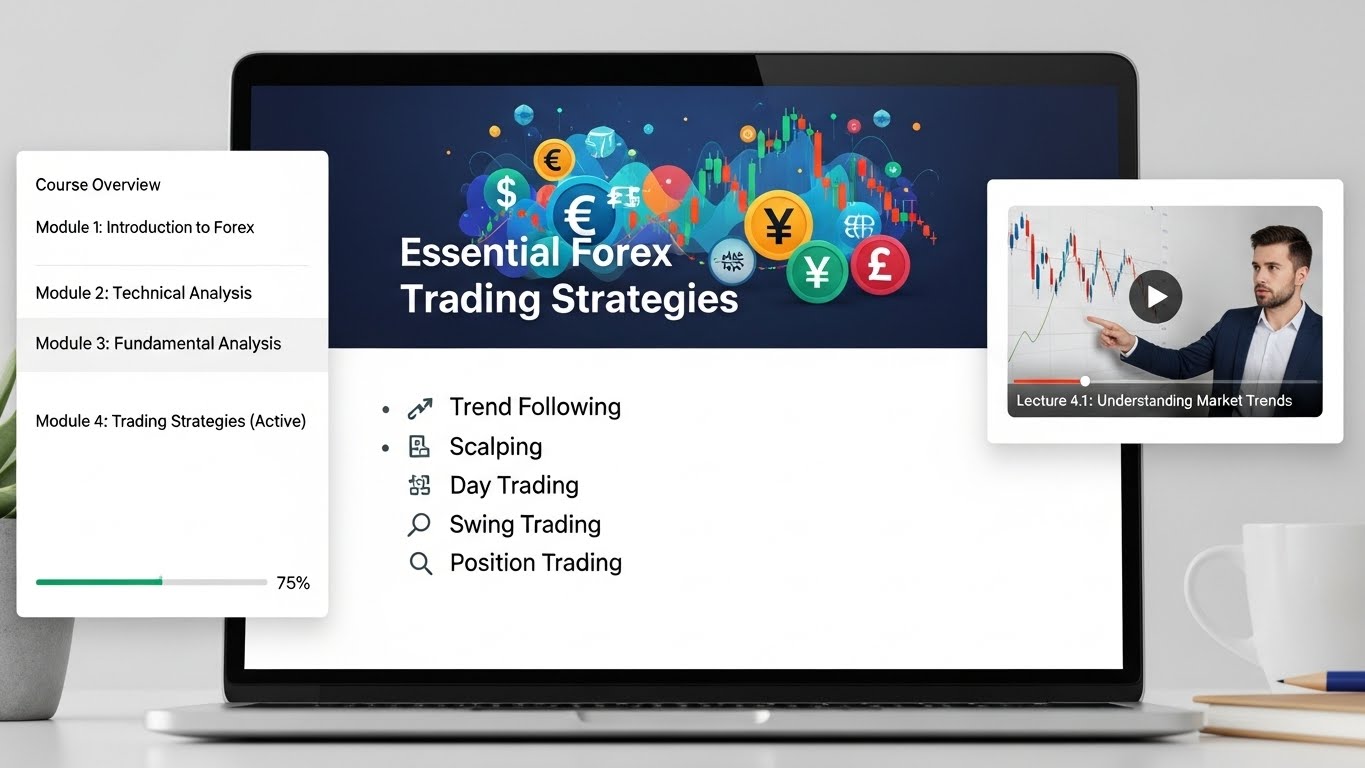
Forex trading can seem overwhelming at first. To tell you the truth, it is overwhelming, especially when faced with all the technical terms and market movements. But when you know what to look for, things start to clear out gradually. The important thing is not to rush into trading. Take your time to understand it, and you will excel at it.
That’s why I find online courses super useful; they break down forex trading strategies and help traders get a solid understanding without needing years of trial and error. I’m going to walk you through the strategies most often covered in quality online courses so you know what to expect if you’re just getting started or leveling up your trading skills.
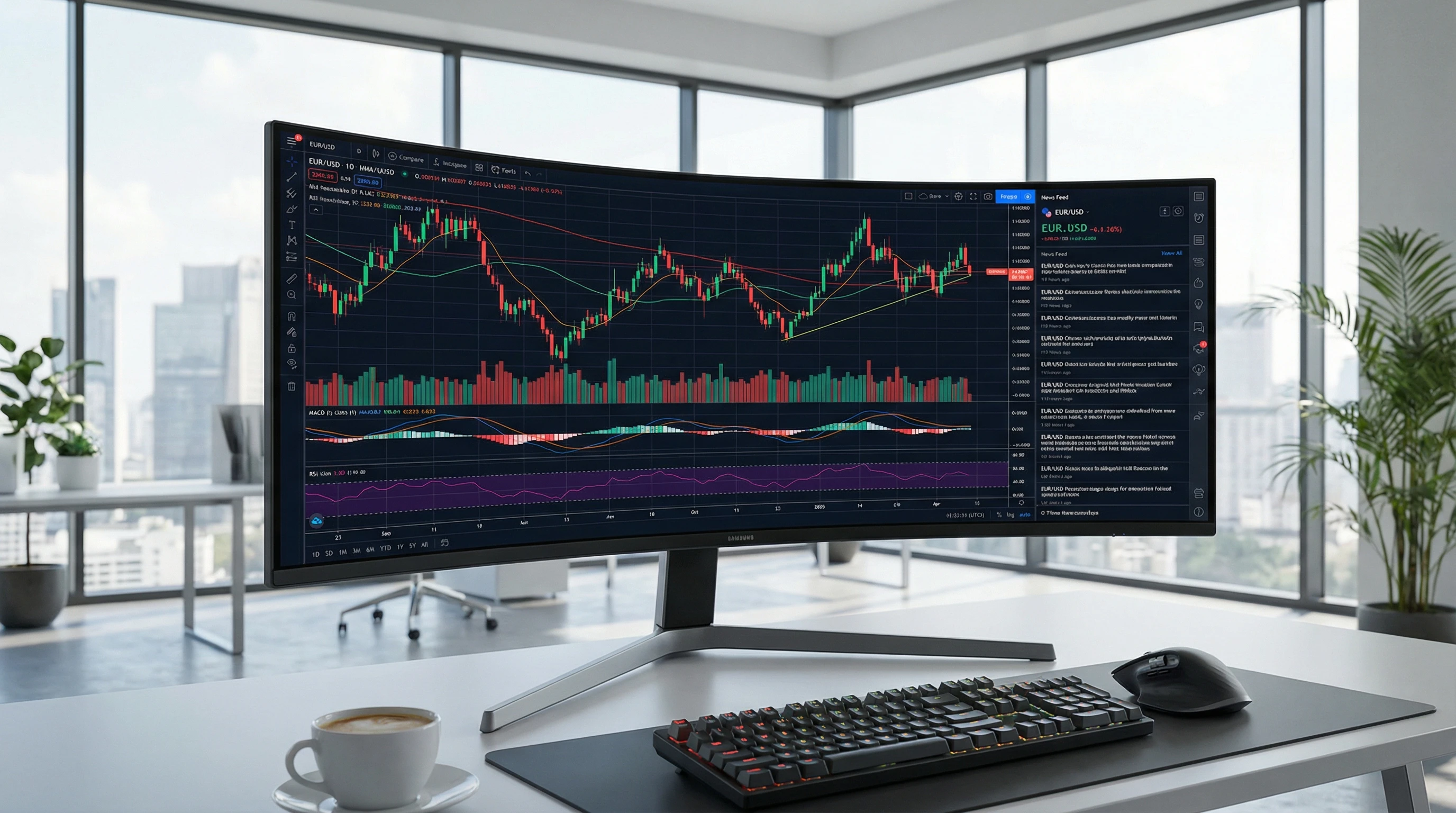
TL;DR: Essential Forex Trading Strategies in Online Courses
Forex trading strategies in online courses usually include entries on trend trading, breakout setups, support and resistance, scalping, swing trading, and risk management basics. Beginners get step-by-step lessons on using these strategies, often paired with practical chart examples, live trading scenarios, and easy risk controls. If you want to understand forex trading from the ground up, these strategies are where most professional traders start and keep refining as they grow.
Why Forex Trading Strategies Matter for Course Learners
Having the right strategy makes a huge difference in forex trading. It’s not just about luck; it’s about understanding the patterns, knowing when to enter or exit trades, and being able to manage risk smartly. Online courses package these ideas in a way that’s easy to follow, helping learners avoid rookie mistakes and start building confidence.
The forex market is open 24 hours a day and is one of the largest trading spaces globally. Strategies taught in courses aren’t just rules; they’re guidelines built from real experience. That means you get to learn what works, what doesn’t, and how to adapt your approach to changing market conditions.
Core Forex Trading Strategies You’ll Find in Top Online Courses
When I took my first step into forex trading, one of the first things I learned was that there is no single magic bullet method. Instead, most forex trading courses online focus on a handful of proven strategies. Here’s what usually shows up:
- Trend Trading: This classic approach is all about following the market’s dominant direction. Courses walk you through how to spot uptrends or downtrends using moving averages, trendlines, or other common tools, and show you how to ride the move while minimizing fakeouts.
- Breakout Trading: Many online instructors love teaching breakouts because they’re easy to recognize and can give quick results. These setups happen when price bursts through a support or resistance level. Good courses will explain how to confirm a breakout and the pitfalls to avoid, such as false breakouts.
- Support and Resistance: Learning to identify support and resistance is a core skill. Courses often cover how to draw these zones, how to spot bounces or reversals, and what to watch for when price approaches these areas on the chart.
- Scalping: If you’re after short, frequent trades, scalping is sometimes included as an optional module. This method involves grabbing small profits from tiny market moves, usually on shorter timeframes like 1-minute or 5-minute charts.
- Swing Trading: Perfect for anyone with a busy schedule, swing trading focuses on trades that last a few days to a week. Trainers will usually walk you through combining technical indicators and chart patterns to capture medium-term moves.
- Risk Management: While it’s less flashy than spotting a big trend, all quality online courses emphasize risk management. That means position sizing, using stop losses, and knowing when to step back if the market isn’t working in your favor. In my point of view, this is the most important strategy of all. I have written many entries only on this topic.
Getting Started: What Beginners Can Expect in Online Forex Courses
Signing up for Forex online courses for beginners can be a game-changer, especially if you’re new and want a structured learning path. Lessons usually start simple and build up:
- Market Basics: Understanding currency pairs, pip calculations, and how spreads work is the foundation. Courses go over all the key forex market terms so you are not lost when the chart talk begins.
- Chart Analysis: Once the basics are down, you’re introduced to candlestick patterns, chart setups, and technical indicators. These lessons give you the tools to actually spot strategy setups in real time.
- Simple Trading Plans: Good instructors don’t just talk theory; they show you how to build a basic trading plan with clear entry and exit criteria.
- Demo Practice: Most trusted courses recommend practicing everything on a de mo account first. It’s a low-pressure way to get experience before risking real money. I say that this is a must. Why lose my money if I can learn on a Demo Account?
Advanced Strategy Tips From Leading Online Forex Instructors
After mastering the basics, a lot of online courses introduce more specialized techniques to help you sharpen your edge:
- Multiple Time Frame Analysis: This method involves checking the same currency pair across different chart timeframes (like daily, four-hour, and one-hour) to make sure your trades line up with the bigger market picture.
- Trading Psychology: Top courses dig into the mental side of trading, including how to stay calm under pressure, develop discipline, and avoid emotional decisions that lead to losses.
- Backtesting: Instructors often show how to test your strategy on historical data, so you know what to expect before you start trading live.
- Building Automated Strategies: As you get more comfortable, some courses introduce using trading robots (also called Expert Advisors or EAs) to automate your methods.
All these topics help traders grow from following simple rules to understanding the market’s behavior and making smart decisions on the fly. If you want to get a feel for analyzing markets, these modules are invaluable for building deeper trading intuition over time and allowing you to mirror professional thinking in your own process.
Challenges You Might Encounter When Learning Forex Strategies Online
No learning process is ever totally smooth. Here are some of the common barriers I have seen, and how online courses generally help deal with them:
- Overwhelming Information: There’s a flood of forex education online; courses that stick to clear, logical modules are way easier to follow and keep you from getting lost.
- Risk of Overtrading: When you learn new methods, it’s easy to start taking trades too often. Most courses teach patience and only taking trades that fit your plan.
- Dealing with Losses: Losing trades are part of the adventure. Instructors often share personal stories to make sure you don’t get discouraged, and they show risk controls that limit how much you can lose in one go.
Practical Story: How Forex Courses Helped Me Avoid Costly Mistakes
When I started trading live, I was excited but also nervous about losing money. My course instructor, this was an offline course, not an online one, shared a checklist for every trade: trend direction, risk/reward ratio, emotional state, and news calendar check. Just using this simple system helped me avoid jumping into bad trades and made a huge difference in my confidence. Even now, keeping a similar checklist next to my trading desk reminds me to stick with my plan rather than reacting impulsively to short-term market noise.
Applications of Forex Strategies in Real Trading
It’s one thing to learn a strategy; it’s another to use it well in a live market. The best online courses show you practical applications of every method, so you know what to do when the pressure is on. For example, if you’re using trend trading, you might get sample trade ideas based on current market charts. If you’re practicing breakout setups, some instructors walk you through live streams or video recaps of recent trades so you can see the full process in action.
- Trend Trading: Catching longer moves during active trading sessions, such as London or New York.
- Scalping: Grabbing quick trades during times of high volatility or economic news releases.
- Swing Trading: Holding trades over days, often with less screen time needed. Many experienced traders mix in some variety between swing and day trades based on their schedules and market conditions.
Additionally, courses sometimes group students into forums or small study groups so you can share observations and check in with others about setups, which speeds up the learning curve and keeps you motivated.
Frequently Asked Questions
Here’s what most new forex traders want to know before and during their online course adventure:
Question: What’s the easiest strategy for beginners to start with?
Answer: Trend trading or support/resistance approaches are usually the simplest for new traders. These strategies let you practice following the price without getting bogged down in too much complex analysis.
Question: Do I need expensive software or tools to follow strategies from online courses?
Answer: No, most strategies work with free charting platforms like MetaTrader or TradingView. Paid tools can help, but aren’t required for most beginners.
Question: Can anyone become a successful forex trader with just online courses?
Answer: Courses are a great start, but consistent practice and reflecting on your own results matter a lot too. Many traders also follow guides like those found here for extra ideas.
Final Thoughts
Learning forex trading strategies in online courses helps flatten the learning curve, giving you structured lessons, practical tips, and a safer way to practice before putting real money at risk. The mix of strategy, discipline, and risk control turns theory into an active skill. Whether you’re brand new or looking to get more consistent results, picking a course that covers these core strategies will pay off in your trading adventure. If you practice regularly and stick with your plan, you’ll find that what looked complicated at first begins to make more sense, and you’ll be well prepared for real market opportunities.
I really enjoyed how this article breaks down the main forex trading strategies that are typically covered in quality online courses. It’s helpful to see clear explanations of trend trading, breakout setups, support and resistance, scalping, swing trading, and the emphasis on risk management basics, especially for someone who’s just starting out or looking to level up their skills. I also appreciate the practical way you encourage using demo accounts before risking real money. After reading this, I’m curious, which of these strategies do you recommend beginners focus on first to build confidence before moving on to the more advanced ones?
Hello Hanna,
Thank you very much for your comment. I am glad that you found this diary entry useful.
With regard to your question. There is really no priority that I can think of. All of them are important for a beginner, but I wouldn’t start with risk management. To appreciate the knowledge about risk management, one needs to know some trading details first to be able to design a money management system for trading.
Thank you for this clear and well-structured overview of essential Forex strategies. As someone exploring online courses, it’s incredibly helpful to have a primer on what methodologies like Scalping, Day Trading, and Swing Trading actually entail before investing in education. Your breakdown of each strategy’s core premise, typical time frame, and risk profile provides a perfect starting point for further research. This article does a great job demystifying the first steps in a trading education!
I kept on hearing this terminology for years, and I couldn’t put a title on what kind of trader I am. It was only recently that I discovered which one I fit into in this phase. Looking back, I can also now determine in each of those phases what kind of trader I was.
During the times when I didn’t know, I created a personal philosophy saying that it does not matter to put a name on what kind of trader I am; the most important thing is to follow the plan that I have in place, regardless of where this puts me on the map of trading types.
The importance of the topic made me realize that I still need to write more about this topic, and I came and found your comment while I was preparing for the piece about the types of traders.
Thank you very much for your comment.
Trading strategies are overwhelming as you shared in your article, that is why I have avoided them longer than I wanted to. Being unfamiliar with all the tech terms only confused me and overwhelmed me.
The online courses you shared sound to be what I have been searching for, something as imporatant as this I hesitate in fear of making a costly mistake.
Online courses sounds to be the best strategy to get started on Forex Trading Strategies, I think I would go with the marketing basics to begin learning for myself.
Jeff
Thank you very much for your comment. About costly mistakes.. If every new idea is tested through backtesting tools and demo accounts, then no mistake would be costly. In trading, the same as in any other discipline, one needs to make mistakes to learn. The beautiful thing here is that one can make mistakes without them being costly by using backtesting and demo accounts.