
The Investor Diary Entry #110: February 21, 2026
When I talk about my trading platform, I am not referring to a broker or software. I am referring to a structure that consists of four elements: my trading philosophy, my strategic objectives, my trading methodology, and my trading plan. Each element plays a specific role. Recently, my trading philosophy was heavily tested after a single trade erased the profits I had made since the beginning of February. That experience pushed me to rethink and refine.
TL;DR
Forex trading strategic objectives must be clear, measurable, and connected to your philosophy and plan. In my case, they include weekly percentage targets, moving to live trading only after doubling my demo account under strict conditions, and continuously refining rules based on real trading experience. Designing objectives is not about dreaming big numbers, but about building a structured path toward how to become a successful Forex trader.
Understanding the Foundation
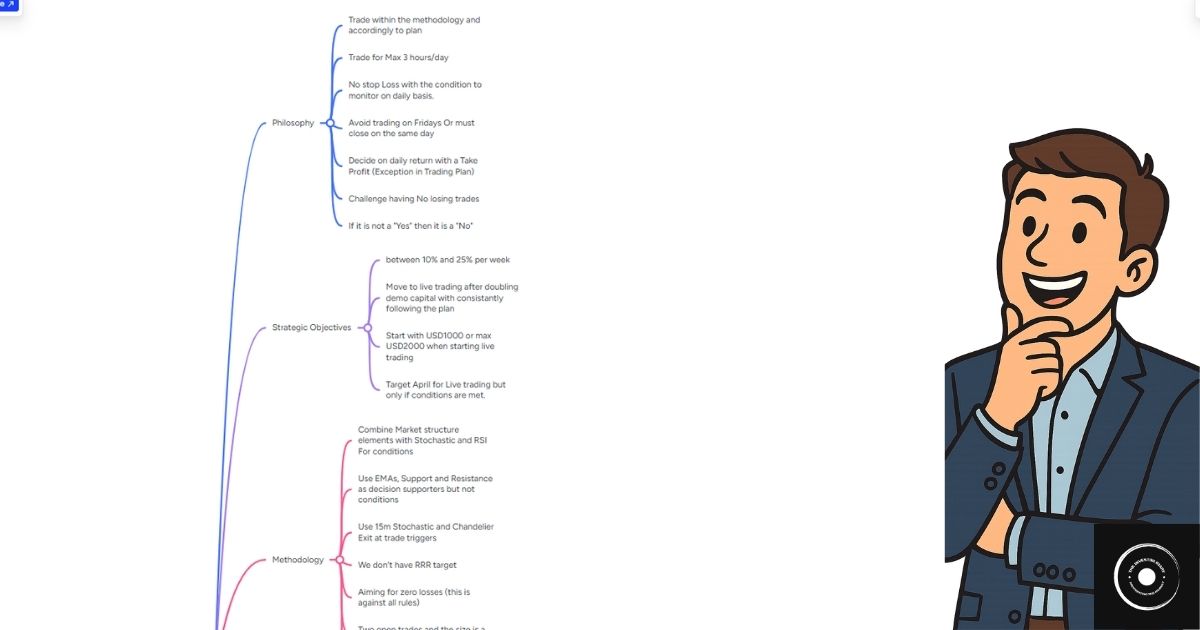
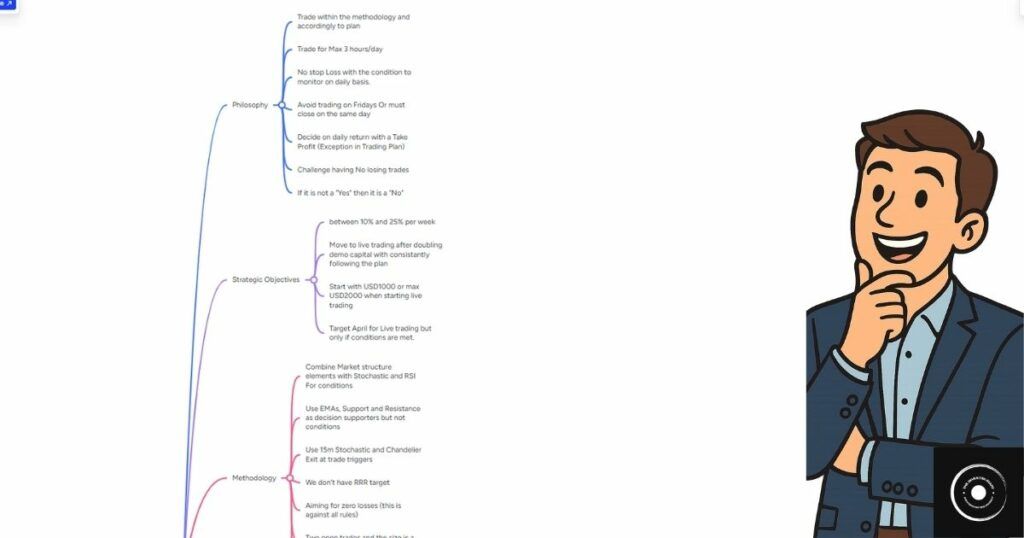
Before discussing objectives, I must clarify the foundation. My trading philosophy includes rules such as trading within my methodology, limiting trading to three hours a day, avoiding Fridays, and closing trades on the same day. It also includes deciding on a daily return target and predefining take profit levels.
One of the most important additions I recently made is this: if there is no definite “yes,” then it is a “no.” If I am not fully confident in a trade, I will not take it. This rule came after a painful experience with a USDJPY trade that violated the spirit of my philosophy, even if it looked aligned on the surface.
Developing a trading philosophy is not a theoretical exercise. It is tested by real trades, real losses, and real emotional reactions. Strategic objectives must grow from that same reality.
Defining My Weekly Performance Target
The first component of my Forex trading strategic objectives is performance-based. I set a goal to produce between 10% and 25% per week.
From the beginning, this objective failed. The best week delivered around 6%, and another week delivered about 3%. The gap between the objective and the actual result was clear.
However, strategic objectives are not guarantees. They are targets that force you to examine your system. If I am not reaching 10% to 25%, then I need to enhance my execution, refine my entries, and align better with my philosophy. The objective remains, but the path toward it must evolve.
This is part of how to become a successful Forex trader. You do not abandon structure because results fall short. You analyze, adjust, and continue.
Linking Objectives to Consistency
The second objective is not about percentage returns. It is about process.
I decided that I will move to live trading only after doubling my demo capital while consistently following my trading plan. These are two conditions:
First, the demo account must double.
Second, this must happen with strict adherence to the plan.
If I double the account but violate my rules, it does not count. The objective is not just financial growth. It is disciplined execution.
Once these conditions are met, I plan to open a live account with 1,000 to 2,000 dollars. I initially targeted April for this transition, provided that at least one of the conditions, or ideally both, are achieved.
This structure connects strategic objectives with developing a trading philosophy. The philosophy defines behavior. The objectives measure whether that behavior produces consistent results.
Learning from What Went Wrong
The USDJPY trade revealed several concerns. I noticed indicator flips that were not fully confirmed. I relied on assumptions about liquidity. I ignored structural elements that should have raised concern. In another case, I entered based on a signal without waiting for candle confirmation, even though I use the 15-minute timeframe as my trigger.
Interestingly, even when I made a mistake, one trade still ended in profit. And even when everything looked aligned, another trade resulted in a heavy loss.
This reinforced a critical lesson: outcomes do not always validate decisions. Therefore, my Forex trading strategic objectives cannot depend only on winning trades. They must focus on structured execution and rule enforcement.
Strategic Objectives as a Living Process
One important realization is that these objectives are under development. I added new rules after reflecting on recent trades. I adjusted expectations after reviewing weekly performance. This is not a static document.
My trading platform is being explained in a series. Each weekend, one component is discussed. During the week, trades are reviewed or pairs are analyzed even if no trades are taken. This ongoing review process supports both my philosophy and my objectives.
Strategic objectives should not be rigid fantasies. They should be dynamic but structured. They must push improvement while remaining grounded in actual performance data.
FAQ
What are Forex trading strategic objectives?
They are measurable targets that define what you want to achieve in your trading, such as weekly return percentages or conditions for moving from demo to live trading.
How do strategic objectives relate to developing a trading philosophy?
The philosophy defines your rules and mindset. Strategic objectives measure whether those rules are producing the desired results.
Why is doubling a demo account important before going live?
It proves that the strategy can generate growth under controlled conditions while following the trading plan consistently.
Is it realistic to target 10% to 25% per week?
It is an objective that requires continuous enhancement of execution and discipline. Whether it is achieved depends on strict adherence to the system and ongoing refinement.
Conclusion
Designing Forex trading strategic objectives is not about setting ambitious numbers and hoping for the best. It is about aligning measurable targets with a tested philosophy and a structured plan.
For me, the objectives include weekly percentage goals, disciplined demo growth, and a clear transition plan to live trading. They are shaped by real trades, including losses that forced reflection and adjustment.
If you are serious about how to become a successful Forex trader, you must treat your objectives as part of your trading platform, not as an afterthought. They should challenge you, expose weaknesses, and guide your development. And most importantly, they must evolve as you evolve.

The Investor
Saturday 21 February 2026
About The Author
I started to look into individual stocks in January 2022. I created this diary initially for myself to track my investing progress, and second, as a place where I can share my ideas publicly, not only on stock investment, but on any venture that I start learning, such as Forex Trading, Blogging, or any other future venture that I might think of trying out.
By repeating things to myself, I learn by trying to explain them to others; therefore, I help myself better understand what I am learning. Additionally, hoping that others will share their ideas and learn from each other, and lastly as an online business where some links that I share are affiliate links, and if anybody bought anything by clicking those links, I will get a commission based on that successful sale, which of course will not affect the price at which you are buying the product or service.
For more detailed information on my affiliate disclosure, please refer to the Full Affiliate Disclosure page.
This blog is also part of my blogging learning project. I’m using a platform to learn this part. If you are interested in it, it is called Wealthy Affiliate.
Furthermore, this site is in no way or form giving any financial or investing advice, nor is it encouraging or discouraging people to buy or sell any financial instrument. This is a personal diary in which I track my own progress and share it for informational, educational, and entertainment purposes.