

The Investor Diary Entry #106: February 15, 2026

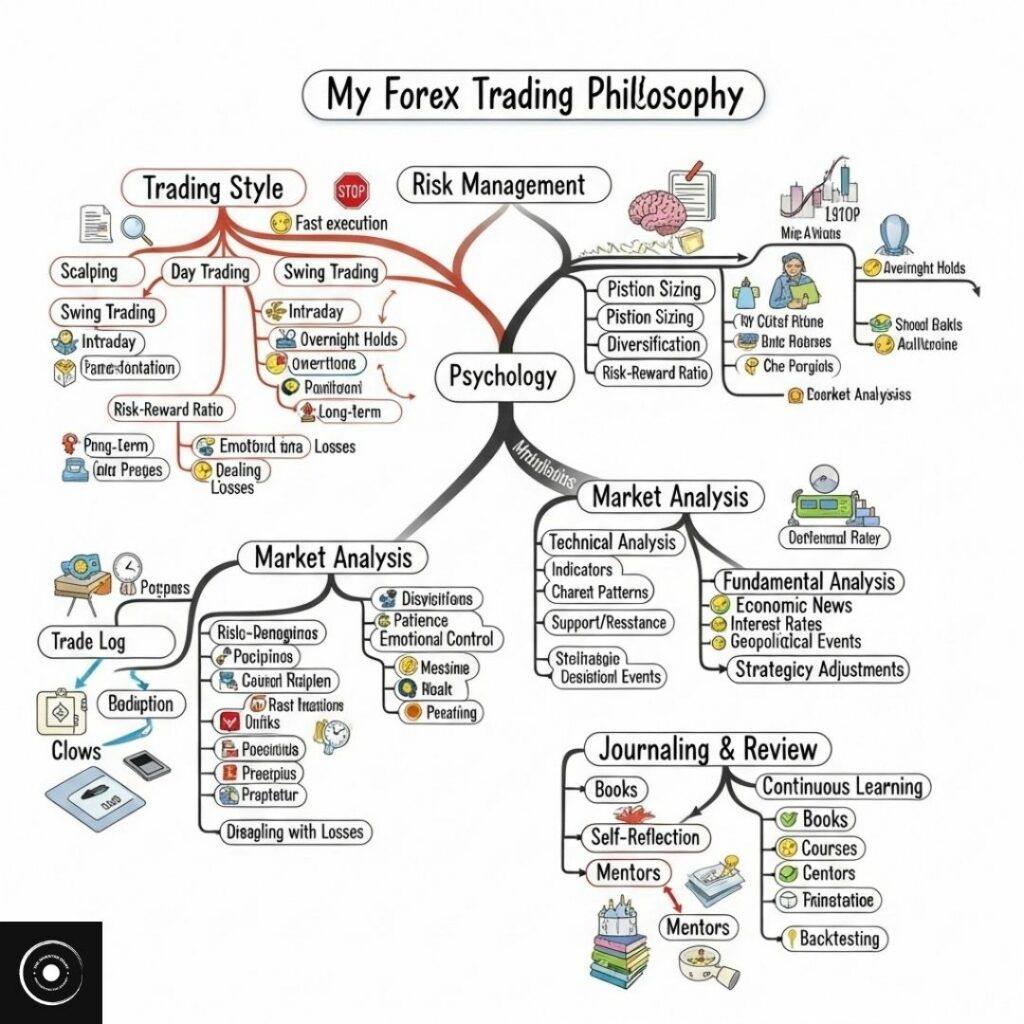
It has been a long journey since my last update at the beginning of the year. I found myself stuck in my own thoughts about developing a trading philosophy, and I decided not to publish anything until I had something clear and structured to share. What I am presenting here is not a perfect system and not something to copy. It is a case study from my trading diary, documenting how I approached building my own foundation.
TL;DR
This post explains how I approached developing a trading philosophy based on structure, discipline, and clear rules. I focus on trading only within my methodology, limiting trading hours, challenging common rules like fixed stop-loss placement, avoiding Friday exposure, and targeting consistent daily returns. This is a personal case study for traders who are thinking about how to become a successful Forex trader by building their own framework rather than copying others.
Why I Stopped Posting and Focused on Philosophy
After several videos discussing developing a trading philosophy, I realized I needed time. I did not want to rush content without clarity. A philosophy is a first step. It evolves with time and experience, but it must start somewhere.
I built my trading platform in layers. First comes the philosophy. Then come the strategic objectives. After that, the methodology, which is the strategy itself. Finally, the trading plan with detailed conditions for entries, exits, and take profit rules. In this post, I focus only on the philosophy layer.
This is not a recommendation. It is not something that should be copied. It is simply how I approached structuring my own thinking.
Trade Within the Methodology and the Plan
The first principle in developing a trading philosophy for myself is simple: trade only within the chosen methodology and according to the plan.
I noticed that during trading sessions, I would get creative. Price would move in a tempting way and I would feel the urge to try something new. That behavior destroys testing. If I am logging trades to evaluate a specific methodology, then mixing random decisions makes the results meaningless.
If I want to test multiple methodologies, that must be planned in advance. The session should be clearly defined. Otherwise, the session is dedicated to one approach only.
For me, this is essential because one of my strategic objectives is to become consistently profitable using a consistent methodology. For anyone thinking about how to become a successful Forex trader, I believe consistency in approach is more important than constant experimentation within the same session.
Limit Trading to a Maximum of Three Hours
The second principle is time limitation. I decided to trade for a maximum of three hours, preferably two.
This rule is connected to my lifestyle. I create content and maintain a trading diary across different channels. I need time for that. Without limiting trading hours, everything else becomes unstructured.
My methodology also does not produce frequent opportunities. I scan multiple pairs, check higher timeframes, align indicators, and then wait for lower timeframe confirmation. Many days pass without a single trade. That is part of the structure.
If conditions are close but not fully aligned, I place alerts. If the alert triggers and I am available, I check the setup. I also limit the number of simultaneous trades to two, with a third only in exceptional conditions.
This time boundary supports discipline and prevents overtrading.
No Stop-Loss on the Platform, With Daily Monitoring
The third part of my philosophy is controversial. I decided not to place a stop-loss directly on the trading platform. Instead, I monitor trades daily and keep the stop level visible on my charts.
The reason is simple. Many times, price hits the stop-loss and then moves in the original direction. That experience is frustrating. My approach is to monitor actively and close trades if conditions are no longer valid.
However, this comes with a strict condition. If I cannot monitor the market the next day, I do not open the trade. If a trade is open and I know I will not be present, I close it, whether it is in profit or loss.
This rule forces responsibility. It is not about ignoring risk. It is about managing it differently within my own framework.
Avoid Friday Exposure
Another principle is avoiding trading on Fridays. I may update market structure, but I avoid opening positions. If I take a trade on Friday, it must be closed the same day. I do not keep trades open over the weekend.
This rule reduces uncertainty and aligns with my preference for controlled exposure.
Daily Return Target and Challenging Losing Trades
I aim for 30 to 60 pips per day. Instead of targeting large pip movements, I adjust position size to achieve my profit objective with smaller moves. Large targets often reverse before being reached.
I am also challenging the idea of accepting frequent losing trades as unavoidable. While losses do happen, I aim to reduce them by cutting trades only when the original conditions are invalidated.
So far, in my demo testing, most trades closed the same day. One trade went deeper into negative territory before I closed it because conditions changed. Later, it recovered, but the rule required closing it.
Backtesting and demo trading allow me to test these ideas before going live. This structured experimentation is part of developing a trading philosophy that matches my personality.
FAQ
Is this philosophy meant to be copied?
No. This is a case study from my trading diary. The goal is to show the process of developing a trading philosophy, not to provide a template to follow.
Why limit trading hours?
Limiting hours creates structure, prevents overtrading, and aligns trading with other responsibilities.
Why avoid stop-loss orders on the platform?
In my case, it is based on personal testing and the experience of stop-loss levels being triggered before price moves in the intended direction. However, strict monitoring is required.
How does this connect to how to become a successful Forex trader?
For me, success starts with clarity, structure, and discipline. Building a personal philosophy helps create consistency rather than relying on random decisions.
Conclusion
This philosophy is still evolving. It is the most challenging part of my trading platform because it requires discipline and commitment to my own rules. Developing a trading philosophy is not about creating perfection. It is about creating structure.
For anyone asking how to become a successful Forex trader, my experience so far suggests that the answer begins with building a framework that you can follow consistently. This is my starting point, and I will continue refining it as I gain more experience.
The Investor
Sunday 15 February 2026
About The Author
I started to look into individual stocks in January 2022. I created this diary initially for myself to track my investing progress, and second, as a place where I can share my ideas publicly, not only on stock investment, but on any venture that I start learning, such as Forex Trading, Blogging, or any other future venture that I might think of trying out.
By repeating things to myself, I learn by trying to explain them to others; therefore, I help myself better understand what I am learning. Additionally, hoping that others will share their ideas and learn from each other, and lastly as an online business where some links that I share are affiliate links, and if anybody bought anything by clicking those links, I will get a commission based on that successful sale, which of course will not affect the price at which you are buying the product or service.
For more detailed information on my affiliate disclosure, please refer to the Full Affiliate Disclosure page.
This blog is also part of my blogging learning project. I’m using a platform to learn this part. If you are interested in it, it is called Wealthy Affiliate.
Furthermore, this site is in no way or form giving any financial or investing advice, nor is it encouraging or discouraging people to buy or sell any financial instrument. This is a personal diary in which I track my own progress and share it for informational, educational, and entertainment purposes.