
The Investor Diary Entry #102: December 29, 2025
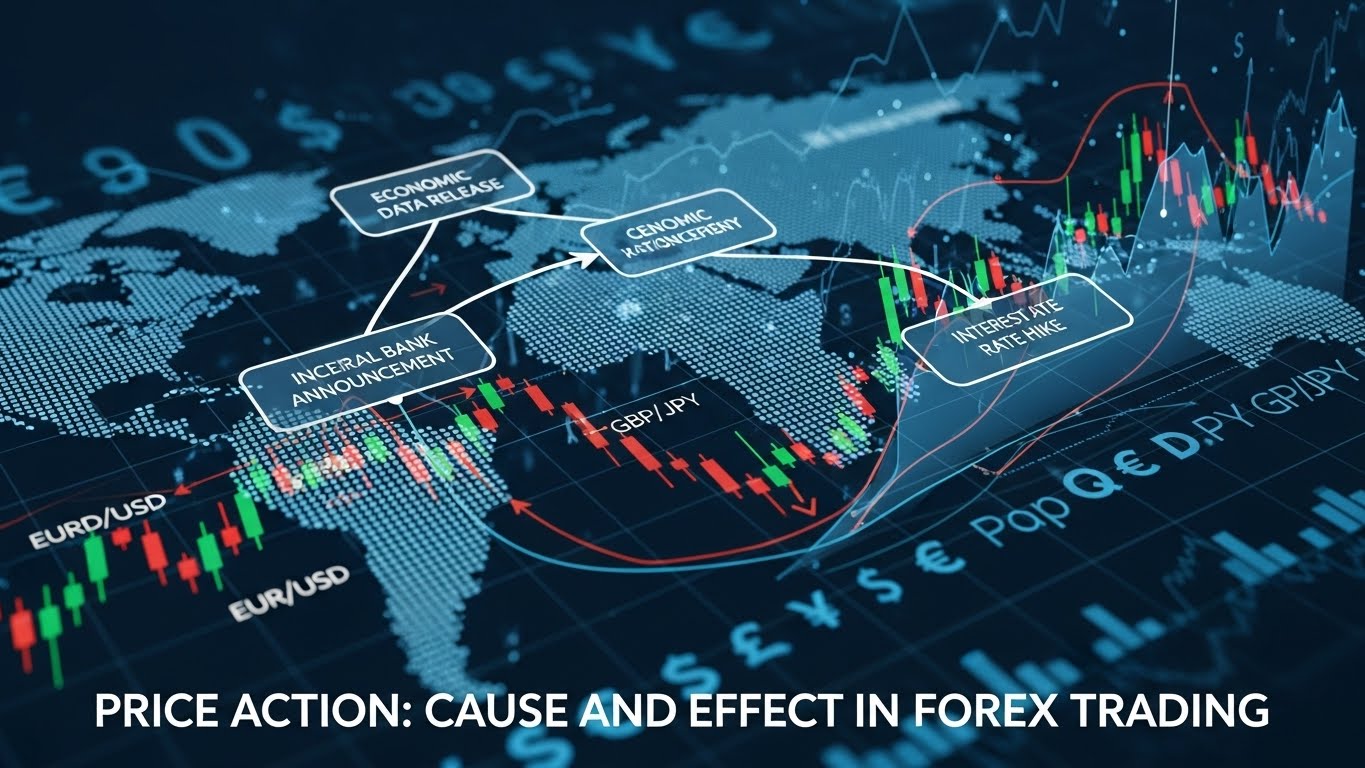
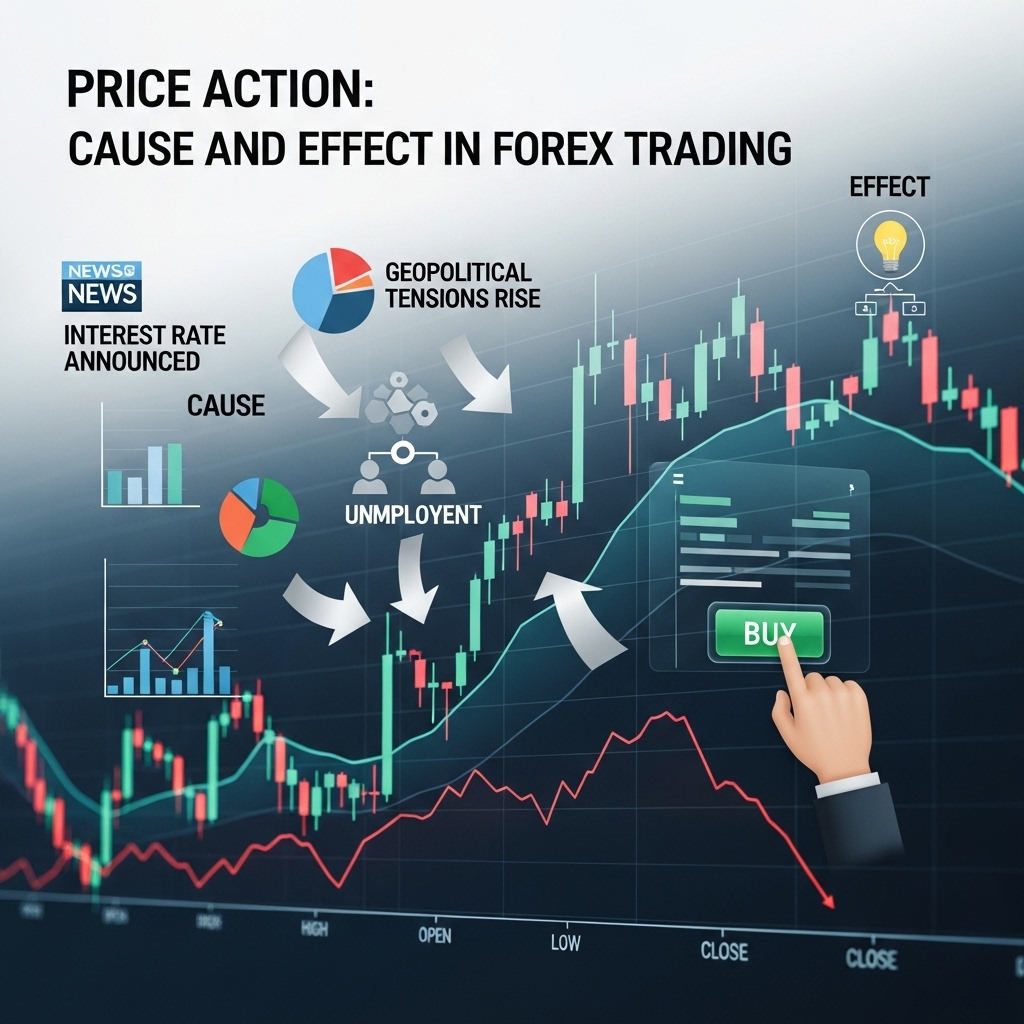
Understanding price action in trading forex is more than just watching charts or following indicators. It is about observing market behavior as a reflection of underlying causes. In my recent experiments and reflections, I focused on isolating these causes and studying their effects, aiming to improve how I trade and refine my overall trading philosophy.
TL;DR
Price action in trading forex is the observable effect of market causes like order flow, liquidity, and participation. Indicators, while they represent effects, are useful for studying price from different angles. Developing a trading philosophy involves understanding these causes and effects, structuring a solid forex trading plan, and using indicators as observational tools rather than decision triggers. Experiments with playbooks using indicators alone can help illustrate their role in the larger picture.
Understanding Cause and Effect in Forex
Last week, I discussed the importance of developing a trading philosophy. I highlighted three areas: my working environment, understanding price cause and effect, and knowledge of the traded asset. This week, the focus is on the second element: understanding cause and effect in price movement.
It is easy to assume that using indicators to make trading decisions is somehow superior to studying price action itself. Indicators are often thought of as signals or predictive tools. However, after reviewing my process, I realized that this perspective is not entirely accurate. Indicators are repackaged forms of price action. They provide information on the effects of underlying market forces such as liquidity, order blocks, and market structure, but they are not the causes themselves. Observing them helps us understand price behavior from different angles.
Indicators as Observational Tools
Indicators like the daily stochastic, 4-hour RSI, and moving average convergence are useful tools to study price movement. In my experiments, I created a playbook based solely on these indicators to isolate their effects on trading performance. I began with three currency pairs—GBPUSD, EURUSD, and USDJPY—and tracked their performance over a year. The total return across the pairs was 11.7% based on 67 trades.
This experiment highlighted that indicators alone cannot tell the entire story. For example, the stochastic may suggest a sell, but the actual price movement might continue upward due to underlying causes not captured by the indicator. This reinforces that while indicators are valuable for observation, they should not be treated as the driving force behind trading decisions.
Building a Trading Philosophy
Developing a trading philosophy requires identifying and understanding each element of your process. The first element, my working environment, is largely set up, and I am satisfied with its efficiency. The second element, cause and effect, is being tested and refined through experimentation with playbooks and indicator-based strategies. Finally, understanding the traded asset is an ongoing process, where the goal is to recognize patterns, behaviors, and reactions specific to each instrument.
A trading philosophy provides the foundation for how to become a successful Forex trader. It emphasizes understanding market causes, studying effects through indicators, and implementing a structured approach rather than relying on chance or guesswork.
Using a Solid Forex Trading Plan
The experiments described above are part of a larger effort to create a solid forex trading plan. This plan structures how trades are selected, executed, and reviewed. By testing indicators individually and then in combination with other market elements, it is possible to observe what works, what does not, and why. This methodical approach ensures that decisions are based on understanding causes rather than simply reacting to effects.
Learning and Experimentation
For traders looking to enhance their skills, knowing how to find Forex trading courses online can provide guidance on methodology, risk management, and strategy development. However, education works best when it complements a personal trading philosophy rather than replacing it. Experiments, observation, and disciplined review of trades provide insights that courses alone cannot.
FAQ
What is price action in trading forex?
Price action refers to the observable movements of price caused by underlying market forces such as order flow, liquidity, and participation.
Are indicators useful in trading?
Yes, indicators are useful to observe price action from different angles. They are effects of market causes, not drivers of price movement.
How can I develop a trading philosophy?
By identifying key elements such as your environment, understanding cause and effect, and studying traded assets, then testing strategies and reflecting on results.
What is a solid forex trading plan?
A solid plan defines rules for trade selection, risk management, and evaluation, ensuring decisions are based on understanding causes rather than random signals.
How do I become a successful Forex trader?
Success comes from combining education, structured experimentation, disciplined execution, and a trading philosophy that prioritizes understanding market causes.
Where can I find Forex trading courses online?
Courses can provide useful frameworks and knowledge, but they should be integrated with personal experimentation and philosophy for meaningful results.
Conclusion
Understanding price action in trading forex is about studying effects and recognizing the causes behind them. Indicators, trading experiments, and structured observation provide the necessary information to refine a trading philosophy and implement a solid forex trading plan. By focusing on the relationship between cause and effect, traders can improve decision-making and approach the market with clarity and confidence.
The Investor
Monday 29 December 2025
About The Author
I started to look into individual stocks in January 2022. I created this diary initially for myself to track my investing progress, and second, as a place where I can share my ideas publicly, not only on stock investment, but on any venture that I start learning, such as Forex Trading, Blogging, or any other future venture that I might think of trying out.
By repeating things I learn to myself and trying to explain it to others, I help myself better understand what I am learning. Additionally, hoping that others will share their ideas and learn from each other, and lastly as an online business where some links that I share are affiliate links, and if anybody bought anything by clicking tihose links, I will get a commission based on that successful sale, which of course will not affect the price that you are buying the product or service at.
For more detailed information on my affiliate disclosure, please refer to the Full Affiliate Disclosure page.
This blog is also part of my blogging learning project. I’m using a platform to learn this part. If you are interested in it, it is called Wealthy Affiliate.
Furthermore, this site is in no way or form giving any financial or investing advice, nor is it encouraging or discouraging people to buy or sell any financial instrument. This is a personal diary in which I track my own progress and share it for informational, educational, and entertainment purposes.