
The Investor Diary Entry #120: April 8, 2026
Managing risk is something I take very seriously every time I trade Forex. The volatility that makes Forex trading so attractive is also what can make mistakes really expensive. Many traders, excellent traders, get wiped out not because their analysis was bad, but because they didn’t protect their capital properly. Understanding how to handle risk can mean the difference between growing your trading account or wiping it out. I’m going to break down the practical steps and helpful habits to manage risk in the Forex markets, so you can come away with some clear, actionable ideas for your own adventure.
TL;DR: Forex Risk Management Explained
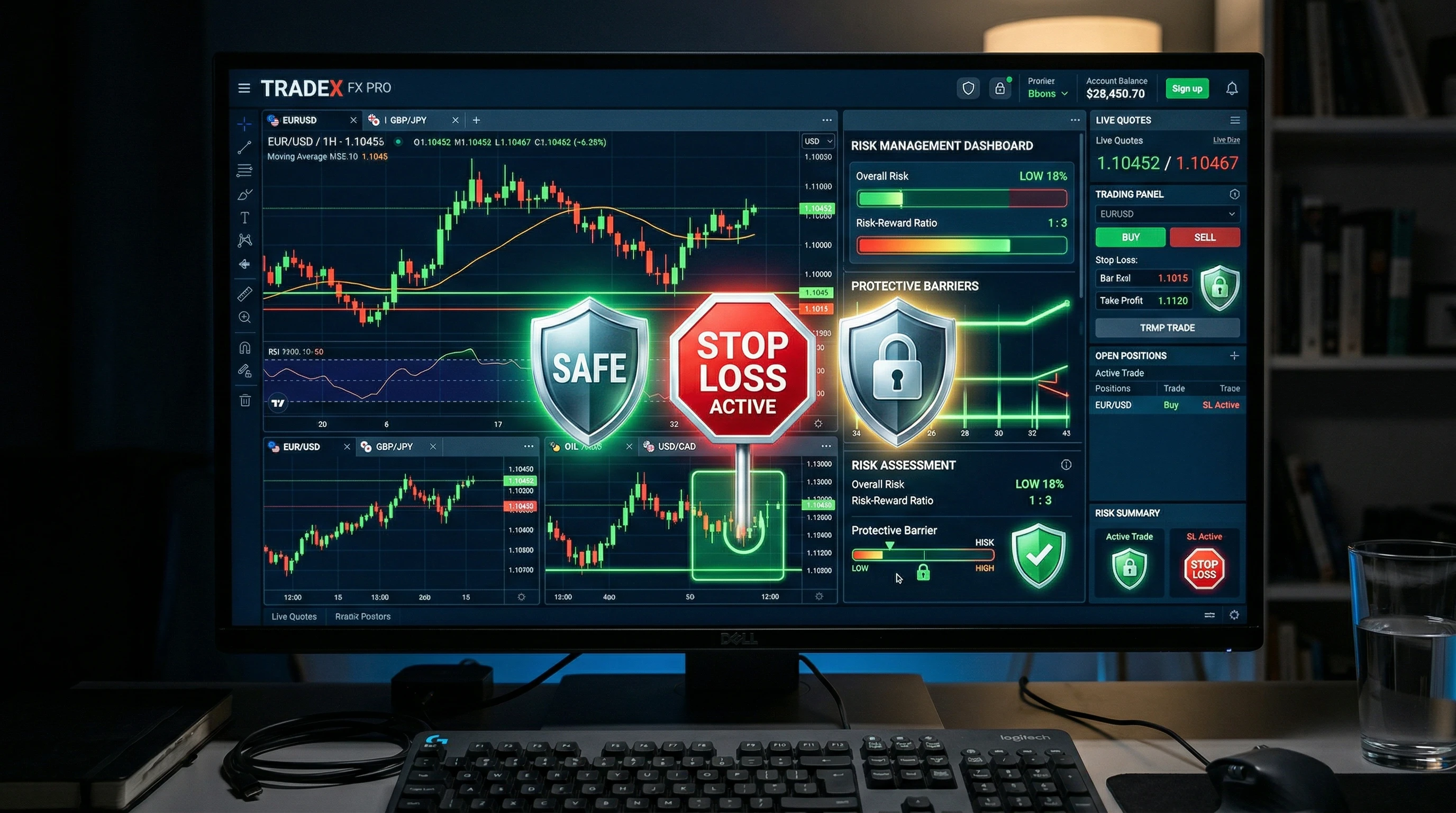
Risk management in Forex trading is all about limiting potential losses, safeguarding your trading capital, and making smart decisions. By using stop-loss orders, setting trade size appropriately, and sticking to a solid risk management plan, traders shield themselves from emotional decisions and big setbacks. Learning and practicing risk management strategies is really important for long-term success when trading currency pairs.
What Risk Management Means in Forex Trading
Forex trading is a game of probabilities rather than certainties. Therefore, no matter how confident I feel about a trade setup, there’s always a chance the market could move against me. Risk management is how I keep my emotions in check and make sure a single bad trade doesn’t drain my account.
When I talk about risk management, I’m referring to a collection of habits and tools designed to limit financial damage when trades don’t work out. This involves deciding beforehand how much to risk, setting stop-losses, sizing trades carefully, and having a plan in place for different market situations. Over time, these measures help smooth out the ups and downs that naturally come with trading volatile currency pairs.
For anyone asking how to learn risk management in Forex Trading, I always suggest starting with the basics and building up your knowledge slowly. Practical experience combined with clear explanations will give you the confidence to protect yourself on the charts.
Key Principles of Managing Risk in Forex
Risk management in Forex has a few common pillars I always stick to, whether I’m scalping, day trading, or holding positions overnight:
- Only Risk What You Can Afford to Lose: The money I use for trading is always extra. I’m not touching rent or groceries. This mindset takes pressure off every trade.
- Know Your Risk Per Trade: I always set a fixed percentage risk per trade (often 0.5-1% of my total account). That way, even a string of losses won’t do much damage.
- Set a Stop-Loss: I never enter a trade without a stop-loss in place. This is a preset exit to limit losses if things go sideways. I tested not having a stop-loss, a distant stop-loss, and a near stop-loss. None of them worked. The only stop-loss that made sense is the one derived from my risk-per-trade percentage.
- Avoid Overleveraging: Higher leverage means bigger potential wins, but also bigger losses. I always choose my leverage carefully based on my experience and trade setup.
- Use Take-Profit Levels: Locking in profits is just as important as cutting losses. Take-profit levels help stop me from getting greedy and risking gains.
Why Risk Management Matters for Long-Term Success
I can’t count how many times I’ve watched traders with great strategies completely derail because they ignored risk management. Even if my trading edge is strong, losses and rough periods are part of the ride. Risk management acts like my safety net, keeping me in the game through the inevitable losing streaks.
As I said before, I have tested the different options of risk management in Forex trading, including not having any risk plan. The only thing that worked is having a proper risk management plan if one intends to stay trading.
If you want to keep your trading account alive and steadily grow it, managing risk is non-negotiable. It provides a sense of discipline and keeps emotions like fear and greed under control. I’ve found that following a consistent system lowers my stress and makes my results more predictable month after month.
It’s not enough to simply have good trading ideas—protecting your capital is what keeps you from busting your account and lets you build up skills over time. Keeping risk rules front and center also means you can trade more confidently, knowing you’ve set boundaries to protect from big losses. If you ever feel nervous about placing a trade, reviewing your risk management plan can bring peace of mind and help you focus on execution instead of worrying about worst-case scenarios.
How to Set Up a Strong Forex Risk Management Plan
I am including a few pointers here, but because of the crucial importance of risk management in Forex trading, I wrote a whole series on how to learn risk management in Forex trading.
- Decide on Your Risk Tolerance: I always know my limits. Whether I’m comfortable risking 1% or 2% of my account on a single trade, I stick to that number no matter what.
- Choose Reliable Forex brokers: A good broker won’t play games with order execution or spread. A reliable broker protects me from surprises and gives me more control over my trades.
- Pick Your Trade Size Wisely: Trade size isn’t random; it’s calculated based on stop-loss size and my risk percentage. This approach helps me keep all my trades consistent.
- Keep a Trading Journal: Writing down every trade, including why I took it and how much I risked, helps me spot mistakes and improve over time.
- Follow a Set Routine: I prepare for the trading day by checking news, reviewing my planned setups, and making sure my risk rules are front of mind.
Stop-Loss and Take-Profit: My Favorite Tools
One of my first lessons was that hope isn’t a trading plan. If I ever catch myself “hoping” for a reversal instead of having a stop-loss in place, I know I’m heading for trouble. Stop-losses are my way of respecting the market and my rules.
- Stop-Loss Orders: This automatically closes a trade if the market reaches my set loss level. I set them based on my technical analysis. Since I currently trade using market structure, my stop-loss is located on the external liquidity of the trading range. Don’t worry about that now, the important thing here is to know how to place the stop-loss based on the technical analysis school or tools that you use, and not just a random placement.
- Trailing Stop: This advances my stop-loss as the trade moves in my favor, so it locks in more profit and limits downside risk.
- Take-Profit Orders: As soon as a trade hits my profit goal, it exits automatically. This removes my tendency to try to “squeeze out” extra pips and risk losing what I’ve gained.
Building these habits took some getting used to, but once stop-losses and take-profits became second nature, trading started to feel more manageable and a lot less stressful.
By the way, I am training myself on all this using a demo account, and I will not get into a live account until I master all these habits and generate consistent profits over a period of time.
Connecting Risk Management with Your Trading Strategy
Having a risk management plan is helpful, but tying it closely to my trading strategy is what creates consistency. Whenever I’m developing a Forex trading strategy, I always test how it performs with different risk levels.
I use backtesting and demo trading to see how my risk rules work in different market scenarios. As I said, I tested wide stops and smaller position sizes or tighter stops with larger trades. Until I finally reached a proper stop-loss placement that suited my Forex trading strategy.
This kind of testing not only helps me avoid big blowups but also shows me if my strategy is even worth the risk involved. Matching risk management with my trading approach is a habit I never skip.
Common Risk Management Mistakes I Always Watch For
- Risking Too Much: It’s tempting to go big after a few losses, but this usually results in bigger setbacks. I always resist the urge to bet more than my plan allows.
- Moving Stop-Losses Further: Adjusting stops in the wrong direction out of fear rarely ends well. Once set, I leave them alone; no negotiation. Except for the trailing, of course.
- Ignoring Market News: Major news can wipe out technical levels and hit stops unexpectedly. I avoid trading around blockbuster announcements unless my strategy specifically accounts for them.
- Revenge Trading: Trying to “win back” a loss by breaking my risk rules is a fast road to bigger losses. I walk away if I feel emotions taking over.
FAQ: Risk Management in Forex Trading
How much should I risk on each Forex trade?
Many traders stick to risking 1–2% of their account on a single trade. This keeps losses contained and helps you survive losing streaks while learning. I use a more conservative one for the time being, which is 0.5 – 1%, but leaning more towards the 0.5%. I might change that later based on the number of trades that my current system is producing.
Is using high leverage a good idea in Forex trading?
High leverage can magnify profits, but it increases risk. I keep leverage conservative, especially when trying out new strategies or trading volatile markets. For more on safe broker choices, you can check this guide on Forex brokers.
What’s the best way to practice risk management before trading live?
I always recommend starting with a demo account to practice placing stop-losses and calculating trade size. This lets you make mistakes without real money on the line while building good habits from the start.
How do I recover after a big loss?
Stick to your plan and avoid jumping back in with revenge trades. Take a break, review what went wrong, and look for patterns in your trading journal. Adjust your approach if needed, but never abandon risk management rules.
Making Risk Management a Habit
For me, risk management in Forex isn’t a one-time thing. It’s an ongoing habit that’s part of every single trade. I treat each position with the same respect, no matter how confident I am. Over time, this discipline will help me stay in the game while I work on refining my strategies.
If you’re just getting started, focus on these risk management basics before worrying about perfect entries or chasing the newest trading strategy. Safe trading is smart trading, and protecting your capital keeps you around long enough to reach your goals.
The Investor
Wednesday 8 April 2026
About The Author
I started to look into individual stocks in January 2022. I created this diary initially for myself to track my investing progress, and second, as a place where I can share my ideas publicly, not only on stock investment, but on any venture that I start learning, such as Forex Trading, Blogging, or any other future venture that I might think of trying out.
By repeating things to myself, I learn by trying to explain them to others; therefore, I help myself better understand what I am learning. Additionally, hoping that others will share their ideas and learn from each other, and lastly as an online business where some links that I share are affiliate links, and if anybody bought anything by clicking those links, I will get a commission based on that successful sale, which of course will not affect the price at which you are buying the product or service.
For more detailed information on my affiliate disclosure, please refer to the Full Affiliate Disclosure page.
This blog is also part of my blogging learning project. I’m using a platform to learn this part. If you are interested in it, it is called Wealthy Affiliate.
Furthermore, this site is in no way or form giving any financial or investing advice, nor is it encouraging or discouraging people to buy or sell any financial instrument. This is a personal diary in which I track my own progress and share it for informational, educational, and entertainment purposes.