
The Investor Diary Entry #134: May 5, 2026
Trading in the Forex market brings its own set of challenges. If there’s one thing I’ve learned over the years, it’s just how pivotal economic indicators are. Trying to make sense of price movement without understanding what’s driving it behind the scenes can make anyone feel lost. Economic indicators in Forex trading help traders get a grip on what might be coming up next in the currency markets. These indicators, like GDP or employment numbers, aren’t just background noise. They directly shape traders’ expectations and can quickly swing market momentum.
TL;DR: Why Economic Indicators Matter in Forex Trading
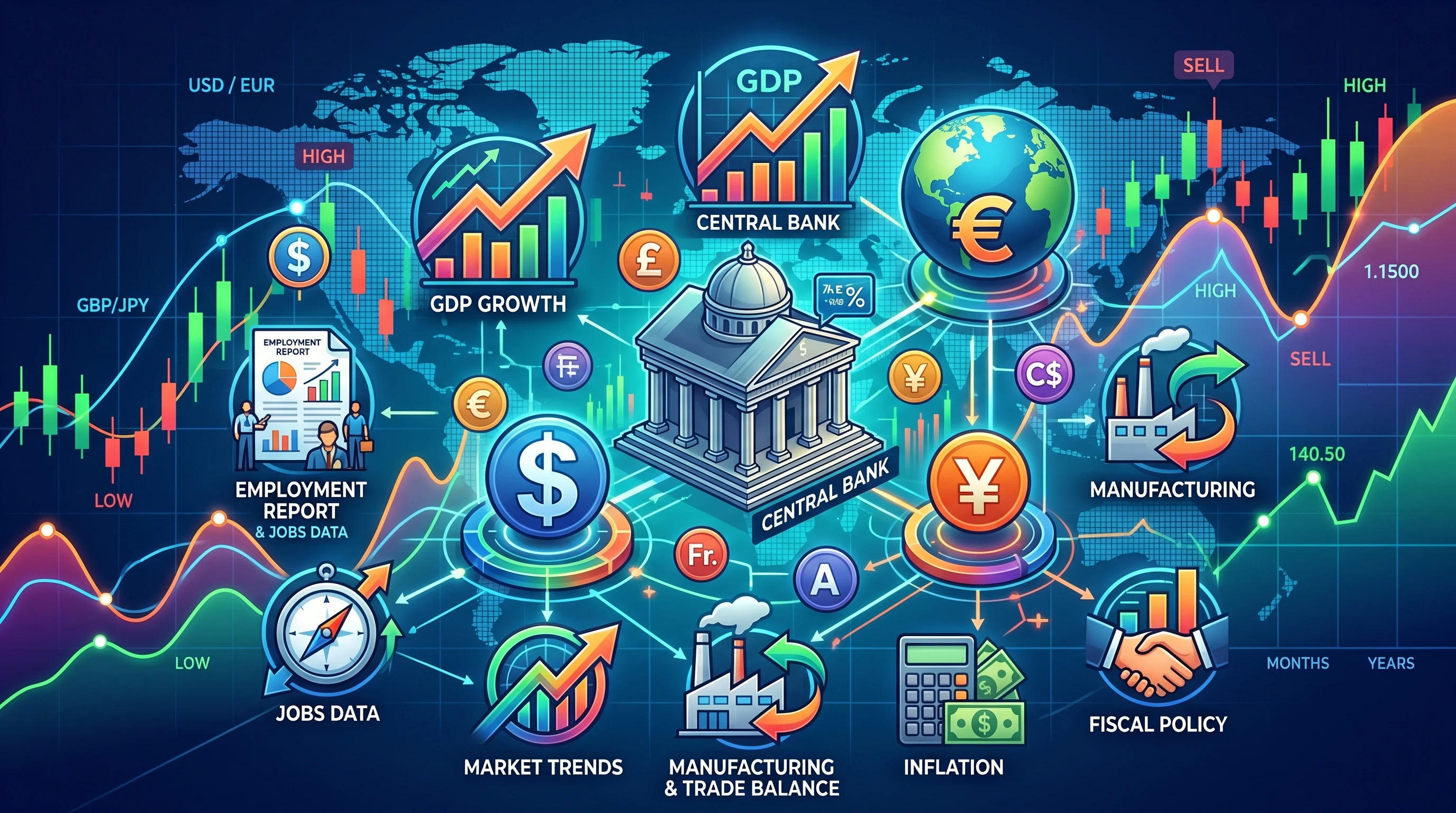
Economic indicators in Forex trading give traders early hints about where a currency might be headed. Knowing how to use things like nonfarm payrolls, central bank announcements, and inflation data means you can spot trading opportunities before the big moves happen. Whether you’re still learning how to read Forex charts or tracking Forex economic events, keeping an eye on the right economic reports is super important for anyone looking to find an edge.
Understanding Economic Indicators in Forex Trading
I often think of economic indicators as the headline news of the Forex world. The numbers you see, such as CPI for inflation or GDP growth rates, aren’t just technicalities. They reflect how countries are performing, and traders worldwide pay close attention because they tend to trigger rapid changes in price direction. Economic indicators come out on a regular basis, and just a small change up or down can shake currency values, sometimes within seconds.
Some of the most-watched Forex economic events include:
- Gross Domestic Product (GDP): This number gives a good snapshot of a country’s economic health. Faster GDP growth usually boosts a currency, while weakness can weigh it down.
- Consumer Price Index (CPI): CPI is the go-to for tracking inflation trends. When inflation rises, it gets traders thinking about interest rate hikes, which can drive a currency higher.
- Employment Reports: Nonfarm payrolls from the U.S. are famous for moving the markets fast. Healthy job numbers tend to make a currency stronger, especially when they beat forecasts.
- Central Bank Announcements: Rate decisions and meeting minutes, especially from the Federal Reserve or the European Central Bank, always grab the spotlight and can move the markets instantly.
Of course, there are plenty more indicators, but these get the bulk of the action. Keeping tabs on the release calendar and having an idea of how the market might react is something to always keep in mind as a trader.
Why Economic Indicators Move the Forex Market
The reason economic indicators matter so much is straightforward: the Forex market is built on expectations. If traders feel things are going better (or worse) than predicted in a major economy, they’ll move their money fast. A slightly higher inflation report sparks a big rally in the U.S. dollar, or when weak GDP numbers send a currency dropping lower.
Market reactions can get intense, especially with high-impact reports. Sometimes, the real story is not in the absolute number but in how it compares to what traders were expecting. For example, if everyone projects U.K. inflation to rise by 0.2% but the actual report lands at 0.6%, the British pound often feels the heat immediately.
Volatility around economic news is often where the biggest opportunities—and risks—come up. That’s why I never trade a major currency pair without knowing what’s scheduled for release that day.
Major Economic Indicators Every Forex Trader Should Know
Getting a good grasp of the top economic indicators can make a massive difference in your trading style. These are the ones I keep on my radar:
- Interest Rate Announcements: When central banks switch up rates, currencies usually respond quickly. Even small rate hikes get traders excited.
- Job Reports: In the United States, the monthly nonfarm payrolls report is the most widely tracked economic release worldwide.
- Inflation Data: Both the Consumer Price Index (CPI) and Producer Price Index (PPI) show how fast prices are rising. Central banks keep these under close watch.
- Retail Sales Numbers: A surge or dip in consumer spending can signal shifting economic trends and impact the market’s direction.
- Trade Balance Figures: These numbers reveal the difference between a country’s imports and exports. Major deficits or surpluses can lead to strong currency moves.
While these are the go-to indicators, remember that local factors sometimes matter more for certain currencies. For example, commodity prices play a bigger role in Australian or Canadian dollar moves than, say, U.S. payrolls do.
How Forex Traders Use Economic Indicators
I use economic indicators just for background info—they are not central to my trading approach. But those who do put economic indicators within their trading methodology, they tend to fit them in their process as follows:
- Game Plan Trades Around Major Releases: They always look ahead to the week’s big data events and set trading plans accordingly. If a major central bank makes an announcement, they often stay on the sidelines until they see the initial reaction settle down.
- Compare Results to Forecasts: Even if a data point is good, if it falls short of what everyone projected, the market could turn lower. Pay attention to both the actual release and the consensus forecast for clues on where the trading pressure will land.
- Watch Price Action During Releases: This is where learning how to read Forex charts comes in handy. Sudden spikes can mean opportunity, or risk, depending on your setup and reaction speed.
- Mix Fundamental and Technical Analysis: Economic indicators hint at what to watch, but always mix them with chart patterns and key price levels. This covers more ground than only using one approach.
This framework gives traders a better shot at staying ahead of big movers in the market. Combining several data points with awareness of the overall technical situation almost always serves up a clearer picture.
Things to Think About Before Trading Economic Indicators
There are a few crucial points to consider before trading around major news releases. Market reactions aren’t always predictable, and things can get wild during high-volatility periods. Here are some key factors worth remembering:
- Liquidity Drops: Right before and after major economic reports, markets often get less liquid. This can mean wider spreads and more slippage.
- False Moves: Sometimes prices lurch in one direction, only to reverse suddenly. These rapid fakeouts can catch traders off guard and trigger stop losses.
- News Trading Requires Speed: If you’re looking to trade news, quick action is crucial. Manual trades can be risky since moves happen in seconds. Automated strategies or preset orders can help, but both have their own risks.
- Managing Risk: Always use stop-loss orders during news events. Without good risk controls, trades can get out of hand fast.
Having a solid process and being aware of the economic calendar are critical for handling risk when trading Forex around key releases.
Practical Examples: Economic Indicators in Action
Here’s how all this comes together in actual trading. Suppose the ECB pulls a surprise interest rate hike. If you have been watching the calendar, you might expect the euro to spike upward. By combining this fundamental insight with a technical read on support and resistance, you may set up a stronger trade with well-defined risk.
Or, maybe U.S. job numbers are far lower than what was forecast. Traders might quickly dump dollars, producing a sharp selloff. These opportunities keep me sharp and prepared. Knowing how to interpret the context, not just reacting blindly, can make the difference between a smart win and a sudden loss.
If you want to keep up with future economic releases, most trading platforms and financial news sites offer economic calendars that list all the major announcements. This makes it much easier to keep track and plan your trading week accordingly.
Frequently Asked Questions
Here are some questions I get about economic indicators and Forex trading:
Question: Do I need to be an economist to trade economic indicators?
Answer: Not at all. It helps to know the basics, but most Forex traders just watch major releases and pay attention to how prices respond before and after the numbers come out. Resources on Forex economic events are super helpful for keeping up.
Question: How do I know which economic indicators to focus on?
Answer: I focus on indicators that typically move the specific currency pair I’m trading. For example, Canadian GDP is key for CAD pairs, while U.S. job stats affect all the major pairs strongly.
Question: Are economic indicators more important than technical analysis?
Answer: Both play a big role. Economic indicators set the theme for the market, but technical analysis helps spot the right timing for trades. I find both together give the best perspective.
Question: Can news spikes be predicted?
Answer: Not with certainty. Even if you expect a particular outcome, markets often react most to surprises. That’s why managing risk, especially using stop-loss orders, is vital during these times.
Wrapping Up
Economic indicators can shape the whole approach to Forex trading. Whether checking central bank statements, inflation data, or payroll numbers, staying alert to news that moves the market helps catch opportunities and dodge potential pitfalls. Mixing insights from the economic calendar with solid chart reading skills can turn raw data into real trading advantages. It’s about understanding the story behind the numbers and turning that knowledge into smarter trades each session.
The Investor
Tuesday 5 May 2026
About The Author
I started to look into individual stocks in January 2022. I created this diary initially for myself to track my investing progress, and second, as a place where I can share my ideas publicly, not only on stock investment, but on any venture that I start learning, such as Forex Trading, Blogging, or any other future venture that I might think of trying out.
By repeating things to myself, I learn by trying to explain them to others; therefore, I help myself better understand what I am learning. Additionally, hoping that others will share their ideas and learn from each other, and lastly as an online business where some links that I share are affiliate links, and if anybody bought anything by clicking those links, I will get a commission based on that successful sale, which of course will not affect the price at which you are buying the product or service.
For more detailed information on my affiliate disclosure, please refer to the Full Affiliate Disclosure page.
This blog is also part of my blogging learning project. I’m using a platform to learn this part. If you are interested in it, it is called Wealthy Affiliate.
Furthermore, this site is in no way or form giving any financial or investing advice, nor is it encouraging or discouraging people to buy or sell any financial instrument. This is a personal diary in which I track my own progress and share it for informational, educational, and entertainment purposes.
That was an excellent article.I myself have no knowledge of currency trading but I was still able to follow the general outline and principles of your article.I also checked out your about me page.I admire the reasons you hold for establishing and maintaining this site.I will keep this site in mind if I ever decide to try Forex trading.Thanks heaps friend.
Hello William,
Thank you very much for your comment and very glad that you found it useful, informative, and easy to follow