
The Investor Diary Entry #123: April 14, 2026
Staying on top of Forex news and economic events can be really helpful for anyone trading in currency markets. The constant movement in Forex isn’t random; big announcements, central bank meetings, and switches in the global economy all play their part. Knowing what moves these markets is vital in making more informed trading decisions, whether you’re new to Forex or have some experience under your belt.
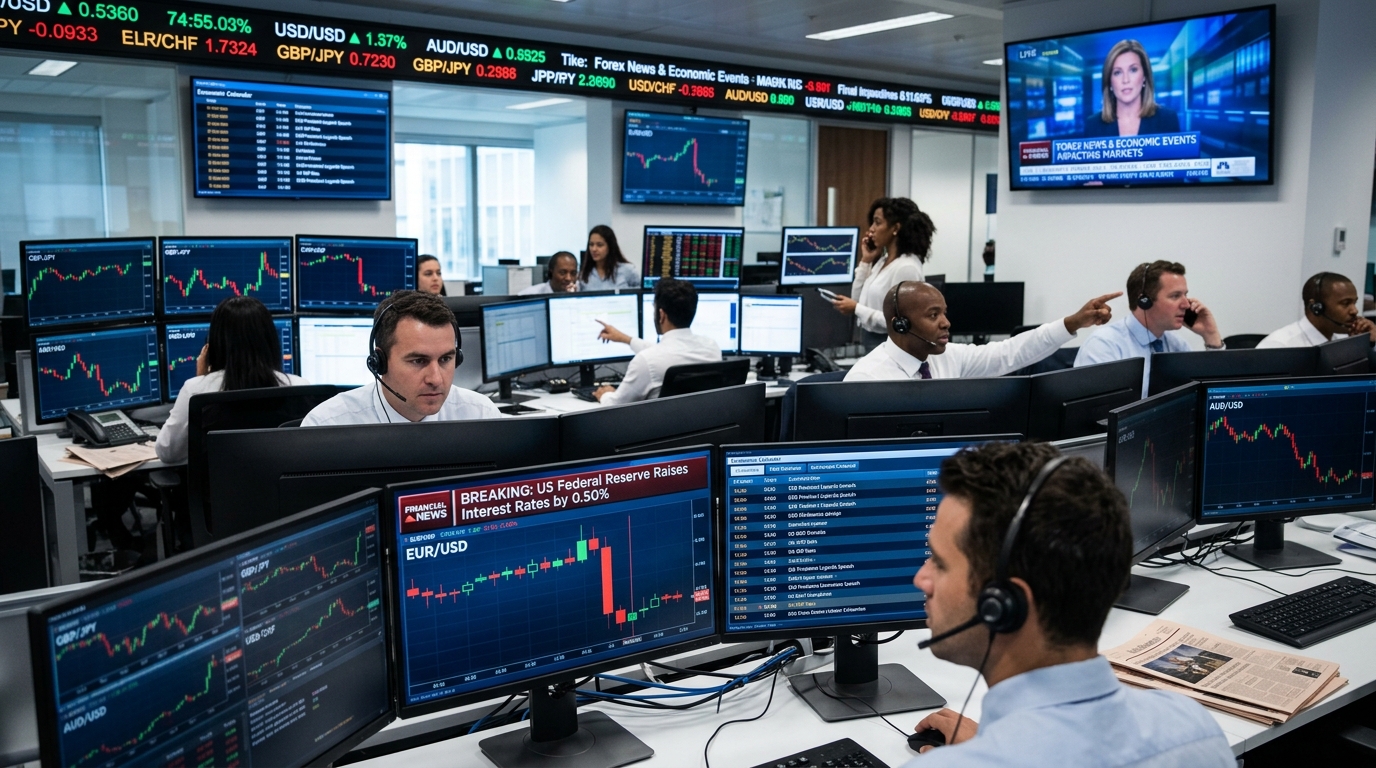
Personally, before any session, the first thing that I do is go to Forex news factory, check their free canlendar, see what big news are happening on that day and at what time.
TL;DR
Forex news and economic events strongly influence currency markets. Key releases like interest rate decisions, inflation updates, and employment data shape market trends. Currency traders benefit from understanding Forex events, using a mix of fundamental and technical analysis, and staying alert to major economic events affecting forex trading outcomes.
How Forex News Shapes the Currency Markets
Every day, Forex news headlines have the power to shake up currency prices. When a country’s central bank announces a surprise interest rate hike, or major governments release new GDP numbers, the effect can be immediate. Traders and investors react quickly; this means a currency’s value can change dramatically in just a few minutes.
Other types of news, political developments, severe weather, or updates to trade agreements, for instance, may not always appear on the economic calendar, but they can create just as much volatility in currency markets as scheduled events.
Major Economic Events Impacting Forex Markets
Staying organized with the economic calendar is pretty handy. Here are some Forex economic events that often move the currency markets:
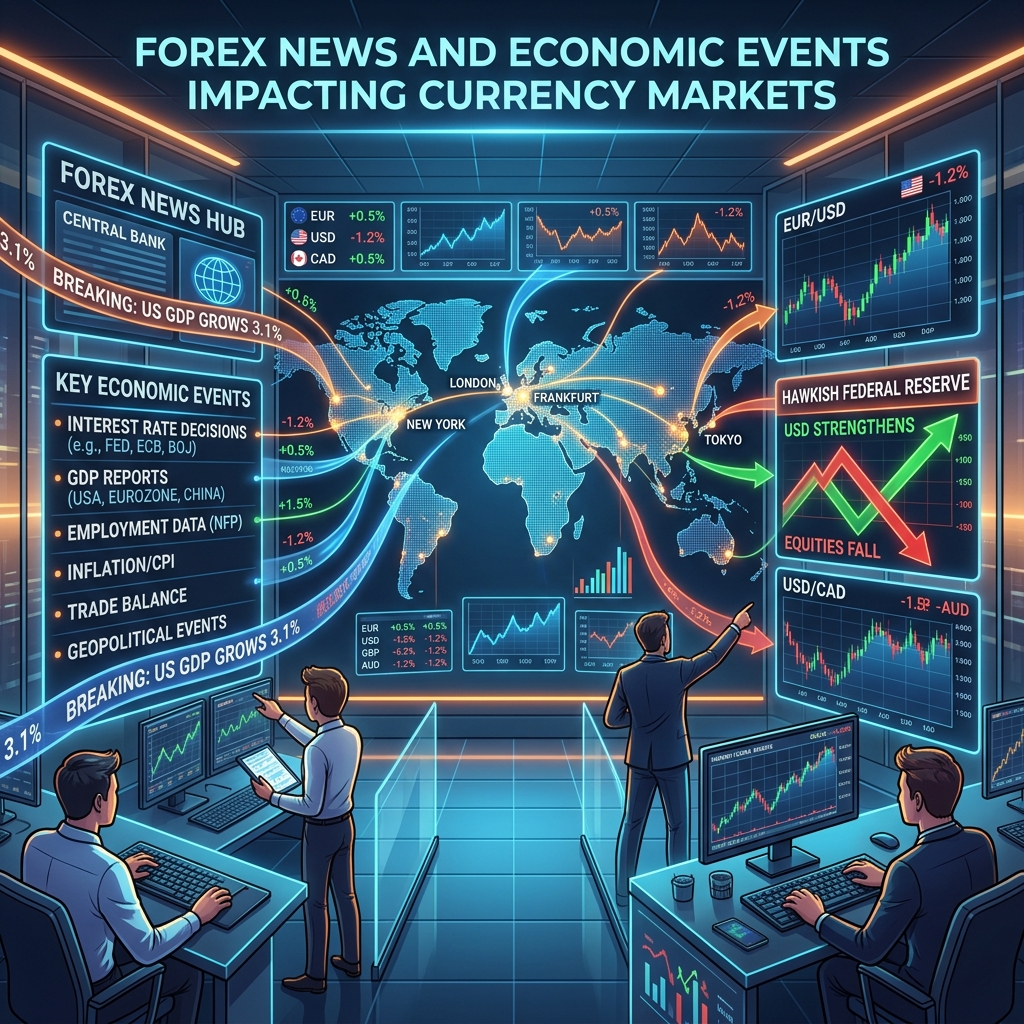
- Interest Rate Decisions: Updates from central banks like the Federal Reserve or European Central Bank are especially watched. Any switch in rates can prompt an immediate impact on currency prices, making these crucial events for traders.
- Nonfarm Payrolls (NFP): The monthly U.S. jobs report gets a lot of attention. Strong numbers can push the U.S. dollar higher, while weak ones often send it down.
- Inflation Data: Reports like the Consumer Price Index (CPI) show whether prices for goods and services are rising. High inflation can mean higher interest rates in the future, which influences currency value.
- Gross Domestic Product (GDP): This figure sums up a country’s economic growth. A surprise jump or drop can shift its currency quickly since it sets expectations for central bank moves in the future.
- Retail Sales Reports: These numbers paint a picture of shopper confidence. If people are spending, the economy gets a boost, normally, this is a positive sign for that nation’s currency, but not always as it might mean more inflation.
- Central Bank Speeches: Even just a single comment by leaders like the Federal Reserve Chair or European Central Bank President may trigger sharp currency moves as traders pick through clues about future policies.
Currency traders usually set alerts for these events. Sudden price jumps and “whipsaws” are common, especially in the minutes or hours after a market report is out.
Understanding Forex News Calendars
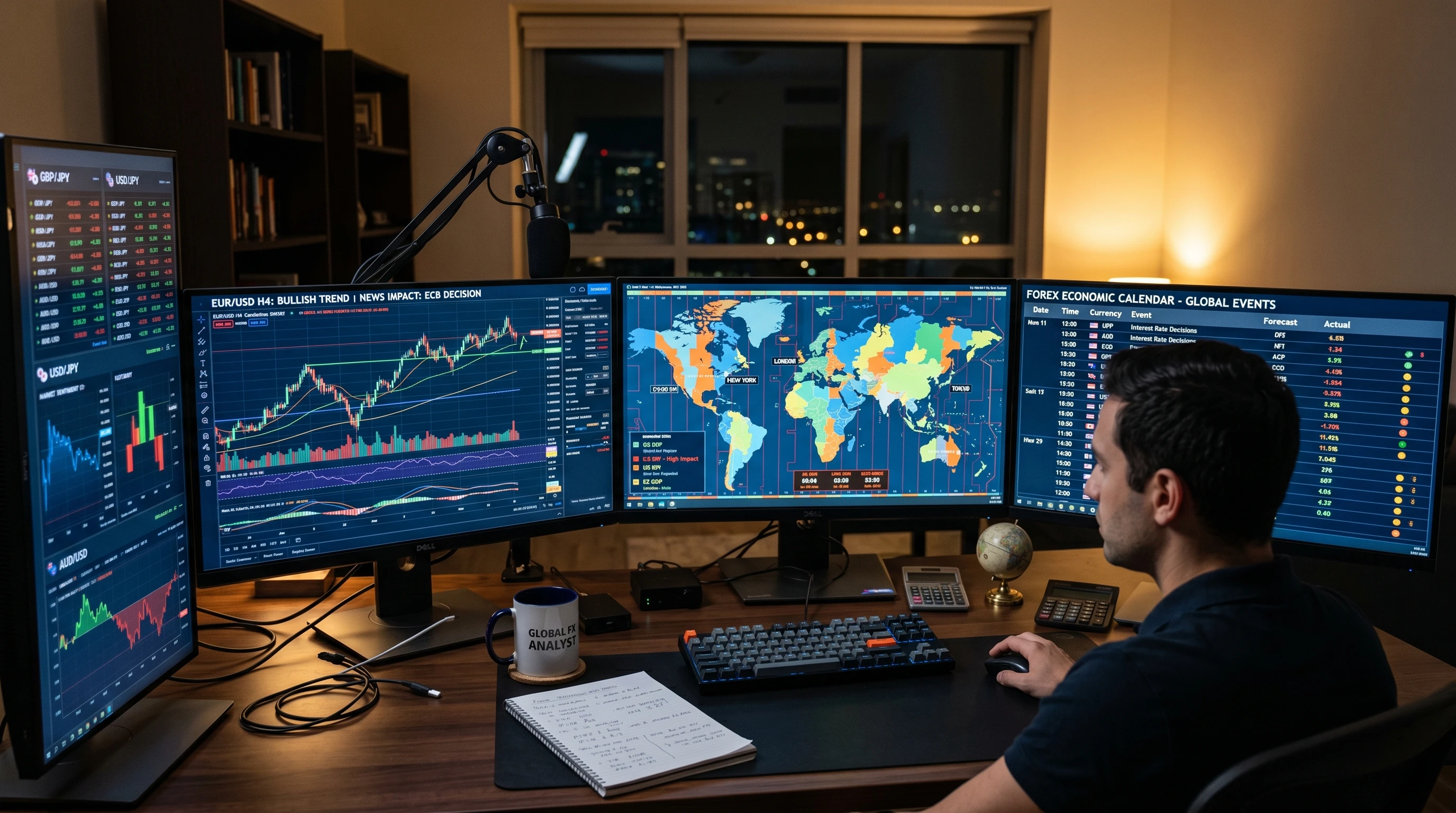
A Forex calendar is a super helpful tool that lists all the big economic events and Forex news releases scheduled ahead. Most traders check it every day to prevent surprises and make better trade decisions around high-impact times.
- Date and Time: Calendars use the local time of the country for each event, so adjusting to your time zone keeps you on track.
- Expected vs. Actual: Markets react most strongly when the actual number is much higher or lower than what was expected.
- Impact: Some releases get marked “high impact.” That’s usually where the sharp market moves happen.
Many free Forex economic calendars are available online, showing a summary, expected outcomes, and even past results. Having this ready helps you spot trading opportunities and avoid getting caught out by unexpected market jumps.
How Traders Use Economic News to Trade
Some traders like to act right during or after an economic event, while others step back and wait for the dust to settle. It really depends on your risk tolerance and style. Here’s how I think about it:
- Trading the News: Reacting quickly to economic releases brings both higher risk and higher reward. Spreads widen, and price changes quickly. This method suits those who are comfortable with volatility and like a bit of excitement.
- Analysis Approach: Mixing both a fundamental and technical approach gives traders a more balanced view. Headlines tell you the “why” behind a move, while technical analysis provides practical entry and exit points, the “how.”
- Managing Risk: Trading on news means risk control has to be tight. Using stoploss orders and keeping trade sizes smaller during big events can help limit surprises if the market moves sharply against your position.
Example: Nonfarm Payrolls and the USD
When the U.S. nonfarm payrolls number comes out, it often stirs up big shifts in USD pairs (like EUR/USD, GBP/USD, or USD/JPY). Before the release, you’ll usually notice lower volume as traders wait. As soon as the news hits, volatility can jump up really fast, with quick price swings in both directions as the actual figure gets compared to forecasts.
Things to Watch: Risks, Opportunities, and Overreactions
The market’s first reaction to economic news is often dramatic, but it’s not always long-lasting. Sometimes prices swing too far one way before instantly reversing. Telling whether a move is part of a bigger trend or just a short-term reaction matters a lot for anyone trading around news.
- Liquidity: During key announcements, liquidity can dry up. This makes it trickier to get your trades filled at the price you want.
- Slippage: Fast moves sometimes mean your order goes through at a different price than expected. This is especially tough if you trade big positions.
- Kneejerk Moves: If you spot a massive spike right after a news release, it’s usually smarter to wait for confirmation before getting involved. Jumping in blindly can backfire if the market flips quickly.
Taking a step back and using a fundamental and technical analysis blend can assist in filtering out the noise—so you won’t react emotionally to every single headline.
Mixing Technical and Fundamental Strategies
Basing your plan on both news (fundamentals) and price action (technicals) provides a fuller picture. Relying on one alone can leave you guessing. For example, if a critical level of support lines up with a positive GDP surprise, that setup may hold more weight than using just one tool by itself.
It’s common to use news events as a trigger; after that, technical tools help spot the best trade entries and exits. This keeps you from trading “in the dark”—letting the story and statistics work together to shape your trading decisions.
FAQ: Forex News and Economic Events
Here are answers to some frequent questions about how Forex economic events and news releases affect currency trading:
What type of economic events impact currency prices the most?
Major releases like interest rate decisions, employment data, and inflation reports cause the biggest moves in Forex because they directly shift a country’s economic outlook.
How far in advance should I check the Forex calendar?
It’s best to review the Forex news calendar at least one day ahead, this way, you can anticipate any coming high-impact events and adjust your trading plan if needed.
Should I rely just on news, or use it with technical analysis?
Combining both often gives better results. News explains the “why” behind price changes, while technicals show you when to jump in or out. The fundamental and technical approach is a popular method for this reason.
Is it risky to trade during economic news releases?
Trading during these periods is higher risk, slippage and widened spreads are common. Adjusting your settings and trade sizes can help ease up some of that risk.
How do central bank meetings influence currency markets?
Central bank meetings set off some of the biggest currency swings. Monetary policy changes (like interest rate shifts or forward guidance) alter investor views on a country’s economic health and its currency’s prospects.
Wrapping Up
Keeping tabs on Forex news and timing economic events brings clarity to the day-to-day ups and downs in currency markets. The most successful traders pay close attention to both the reason behind a move and what the price charts are revealing. Using an economic calendar and mixing different analysis methods helps you stay sharp, make solid decisions, and steer through the thrills and risks of Forex trading.
The Investor
Tuesday 14 April 2026
About The Author
I started to look into individual stocks in January 2022. I created this diary initially for myself to track my investing progress, and second, as a place where I can share my ideas publicly, not only on stock investment, but on any venture that I start learning, such as Forex Trading, Blogging, or any other future venture that I might think of trying out.
By repeating things to myself, I learn by trying to explain them to others; therefore, I help myself better understand what I am learning. Additionally, hoping that others will share their ideas and learn from each other, and lastly as an online business where some links that I share are affiliate links, and if anybody bought anything by clicking those links, I will get a commission based on that successful sale, which of course will not affect the price at which you are buying the product or service.
For more detailed information on my affiliate disclosure, please refer to the Full Affiliate Disclosure page.
This blog is also part of my blogging learning project. I’m using a platform to learn this part. If you are interested in it, it is called Wealthy Affiliate.
Furthermore, this site is in no way or form giving any financial or investing advice, nor is it encouraging or discouraging people to buy or sell any financial instrument. This is a personal diary in which I track my own progress and share it for informational, educational, and entertainment purposes.
This was a really clear and helpful overview of how forex news and economic events influence currency movements. I especially liked how the article explained that markets react not just to the news itself, but to how it compares with expectations, which is something many beginners often overlook. The breakdown of key indicators like interest rates, inflation, and employment data made it much easier to understand why currencies move the way they do, especially during major announcements. It also highlighted well how volatility increases around these events and why traders need to be cautious.
One thing I am curious about is how you personally prioritize different types of news when several important economic events are released close together. How do you decide which one is likely to have the strongest and most lasting impact on the market?
Hello, Thank you very much Hanna for your comment.
Personally, I do not prioritize important economic events. When news are coming out close to each other, I block that whole time range.
There is also a dynamic relationship between fundamental analysis and Technical Analysis. Many think that one is more important than the other. I don’t see it that way, sometime news just drive price to important technical area on the chart; either to break it or to react from it.
I found this really helpful, especially the way you explained how different economic events can shift currency markets. It’s easy to focus only on charts but understanding the “why” behind price movements makes a big difference.
From my experience, major news releases can completely change the direction of a trade in seconds, which can be frustrating if you’re not prepared. I’ve learned the hard way to be more cautious around those times.
Do you think it’s better to stay out of the market during high-impact news events, or are there safer strategies to trade them effectively?
There are two different things, but before getting to those, to answer your question directly: Yes, many trading plans require staying out of the market during important news.
Now to the two distinctive things, One; There is something called fund amental analysis which is analysing the economic events and how they would affect the currency market. This commplements the technical analysis, but some have the capability to trade based on fundamental only, but those are niche.
The other thing is trading the news. There are specific trading plans that revolve around trading the Forex market around the news.