
The Investor Diary Entry #124: April 15, 2026
Figuring out which forex trading platforms and tools are worth your time can feel like a full-time job, especially if you’re just starting out. I remember scrolling through endless choices, each promising better results than the last. Reliable technology can make trading way smoother, and it’s super important to pick platforms and tools that align with your plans and skill level. Here’s my guide to understanding the basics, comparing your options, and getting comfortable with the landscape of modern forex trading.
TL;DR – Forex Trading Platforms and Tools
If you’re exploring Forex trading platforms and looking for the right Forex trading tools, the key is to find a reliable, userfriendly setup that matches your experience level and trading style. Good platforms offer a secure environment, up-to-date forex news, helpful charting features, and fast order execution. Top forex brokers will also have mobile support, demo accounts, and plenty of educational materials builtin. Monitoring market sentiment, backtesting strategies, and keeping up with economic events all play a part in making smart trading decisions.
Forex Trading Platforms: Why Are They Important?
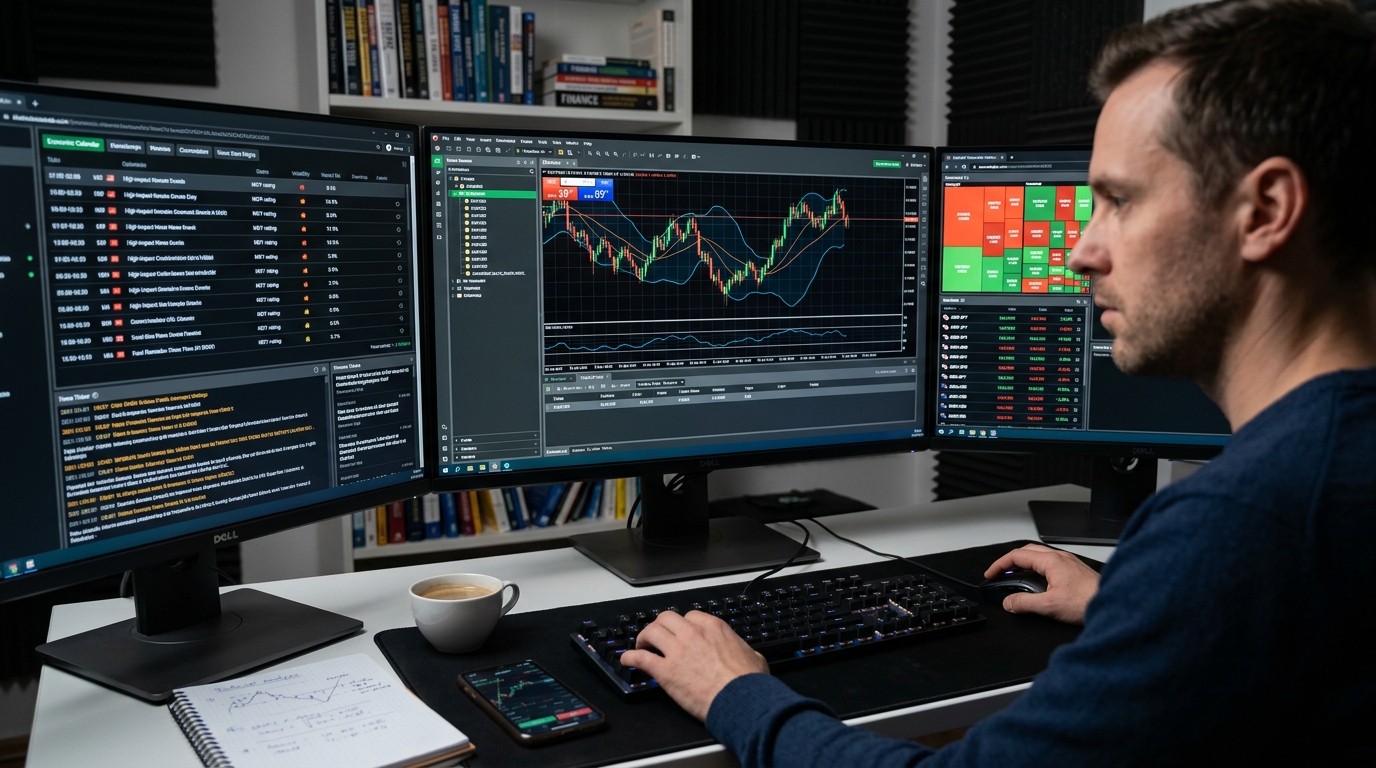
Forex trading platforms are your main hub for currency trading; think of them as your control center. I see platforms as the backbone of my trading environment because they hold my charts, trading history, and access to data all in one place. Picking the right one can save you from headaches down the line.
These days, the majority of retail traders use online platforms provided by reliable forex brokers. Each broker offers different features, like security measures, charting options, and account types. Some platforms are webbased, letting you trade from anywhere, while others require a desktop download for advanced analytics and speed. Mobile trading is now quite common, so making trades on the go is way easier than it used to be.
Personally, I really don’t understand trading on the go. I need to be on my desk to be able to trade. Therefore, it is important to look for a Forex trading platform that speaks to you and your needs.
Key Features of Good Forex Trading Platforms
- Ease of Use: A platform should have a clean interface and quick navigation. This makes it easier to place trades and manage your positions without feeling lost in menus.
- Order Types: Look for support for market, limit, and stop orders. Advanced order types help manage risk and handle various trading strategies.
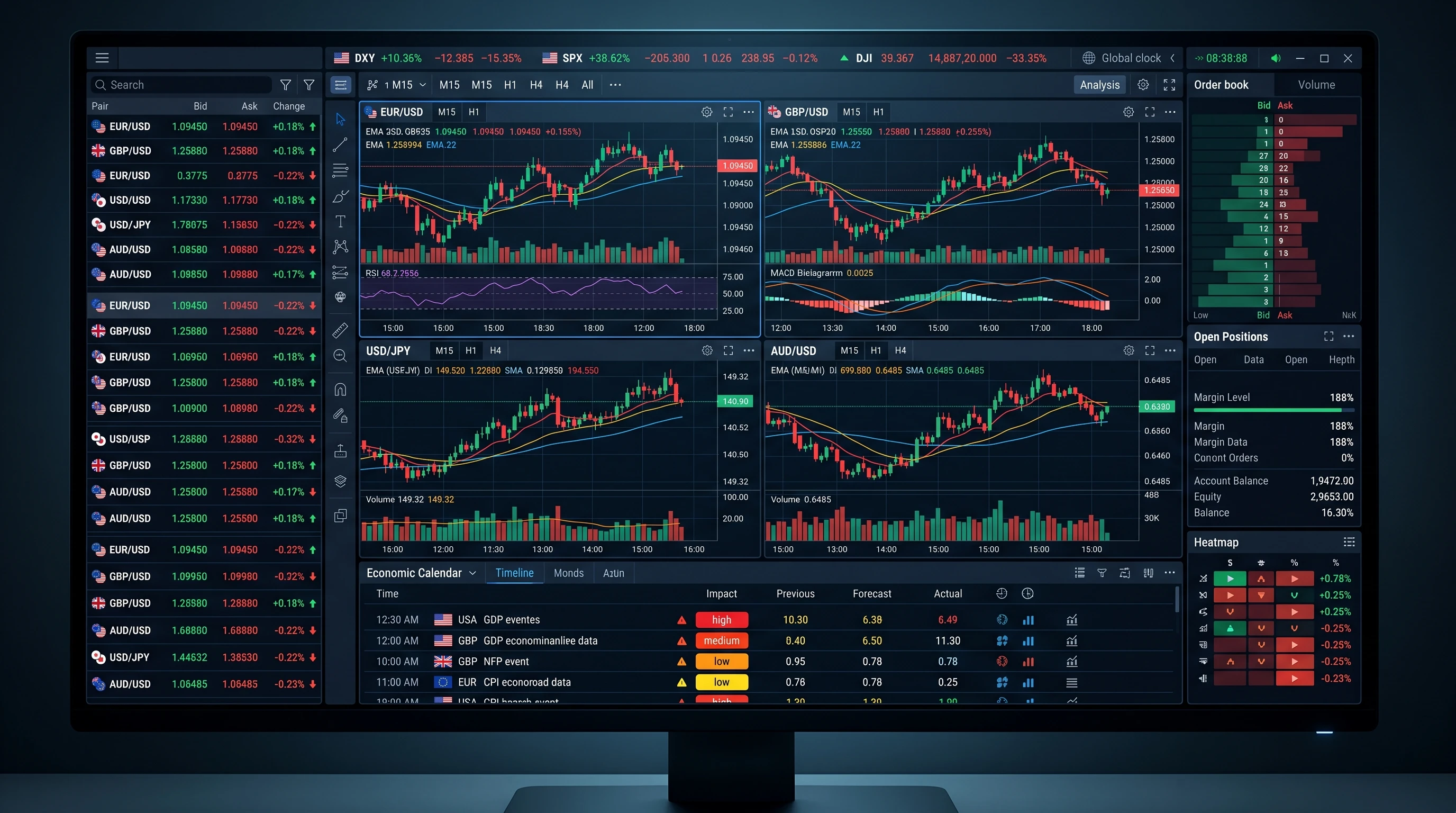
- Charting Tools: Highquality platforms offer detailed technical analysis charts, dozens of indicators, and flexible timeframes for every style—from scalping to swing trading.
- Execution Speed: Fast order execution helps you avoid slippage, especially when trading major news events or highvolatility pairs.
- Security: Twofactor authentication, data encryption, and regulatory oversight are really important for keeping your funds and personal info safe.
- Mobile App: Having reliable mobile access keeps you connected to the markets, with real-time price alerts and trade execution on the fly.
Understanding Forex Trading Tools
While platforms get all the attention, a range of forex trading tools helps you plan, manage, and review your trades. For me, having strong tools can mean the difference between feeling blind and feeling prepared.
Here are some tools I always keep handy:
- Economic Calendars: These show all key financial events, central bank meetings, and important news that could impact currency values. It’s helpful to check these often to avoid surprise volatility.
- News Feed: Direct access to live forex news gives you an edge in fast markets by keeping you up-to-date with everything that might swing a pair.
- Trading Calculators: Used for managing pip values, margin, and potential profits or losses before opening trades.
- Autochartist and Pattern Recognition Software: These automated tools scan charts for classic technical patterns and alert you to possible set ups. They help make the analysis process smoother, especially when checking several pairs at once.
- Backtesting Engines: Try out trading strategies using historical data to see how your plan would have performed in the past. This is crucial before going live with new trading ideas.
- Sentiment Indicators: These show whether most traders are buying or selling a currency pair, giving insights into market mood.
- Scripts and Algorithmic Trading: More experienced users automate trades and manage strategies through platforms that support coding languages like MQL or Python.
Other handy resources include trading journals and spreadsheets to manually track your decisions, which helps with self-review and long-term growth. Over time, you’ll stumble upon your favorite mix of tools that fit your own style.
Comparing Popular Forex Trading Platforms
With so many choices out there, narrowing things down can save you lots of time. I’ll quickly cover the kinds of options you’ll likely run into:
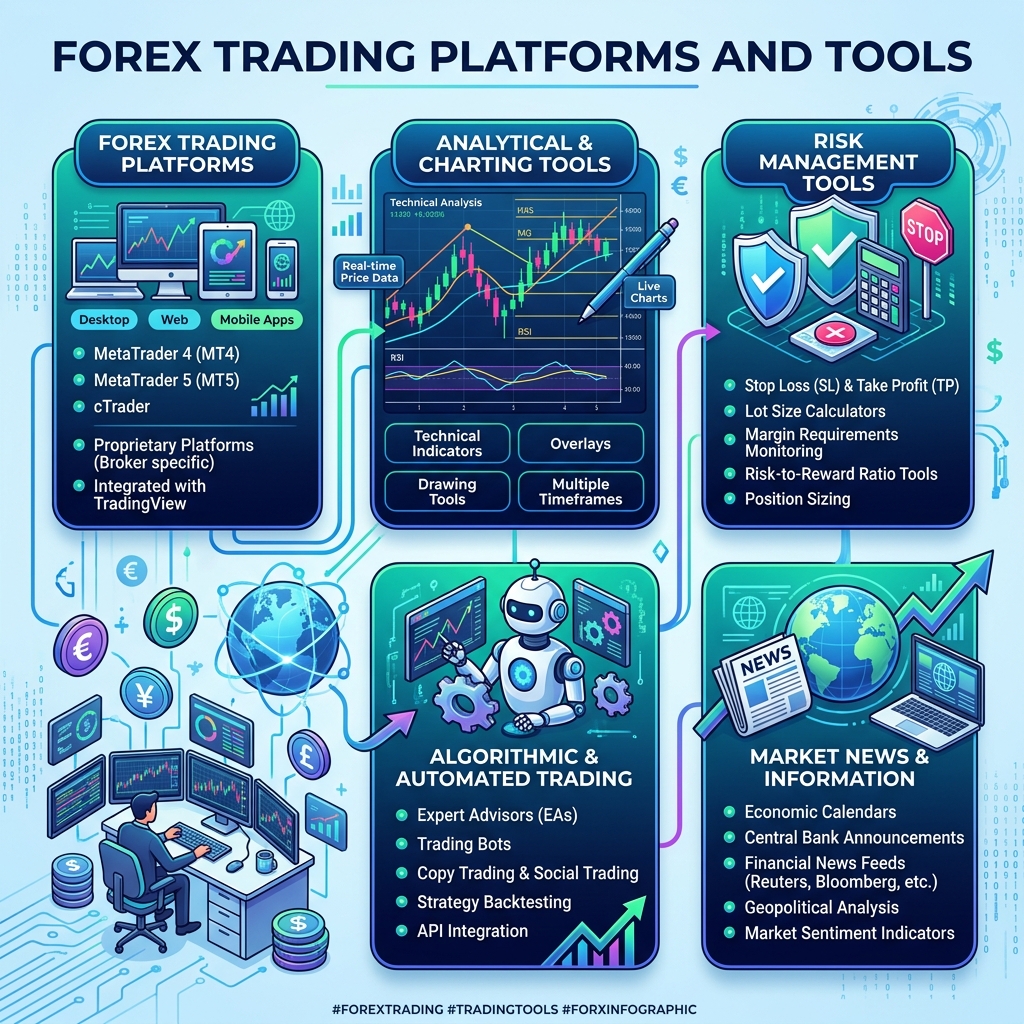
- MetaTrader 4 (MT4): Still the most popular platform for forex. Known for reliability, custom indicators, and automated trading through Expert Advisors (EAs).
- MetaTrader 5 (MT5): Offers multiasset trading, more timeframes, and expanded order types for more advanced traders.
- cTrader: Features a slick interface, strong charting package, and full support for algorithmic trading.
- Proprietary Platforms: Many brokers build custom platforms tailored for their users, which can include smooth charting, social trading, and extra research tools.
Trying out demo accounts can help you see which platform feels most comfortable before putting real money on the line. When testing, make use of the education section and customer support resources provided.
How to Choose the Right Platform and Tools for You
Your trading style, experience, and preferred level of automation all help decide which setup works best. If you’re just starting out, focus on platforms with a gentle learning curve, available demos, and plenty of educational guides. Tools like calculators, economic calendars, and pattern scanners are handy for managing risks and spotting opportunities.
More advanced users might lean toward platforms with algorithmic trading, custom scripts, and integration with thirdparty analytics tools. Support from trusted forex brokers is also important, so look for options with great customer service and helpful communities.
Don’t be afraid to try out several demo accounts. As the technology evolves, platforms will keep upgrading their offerings, so keep an eye out for new features that align with your adapting style. The right combination helps you make decisions with greater trust and confidence.
Common Challenges in Forex Trading Technology
- Connectivity Issues: Fast internet is key. Having backup access, like a mobile data plan, helps if your main connection drops.
- Platform Bugs: Occasional glitches or crashes are possible, so autosave functions and regular software updates are a good idea.
- Overload of Features: Some platforms have so many options that they’re overwhelming. Take time to learn core features before moving to advanced tools.
- Data Security: Make sure your devices have antivirus protection and only use platforms and tools from wellreviewed sources.
Careful research helps buyers make informed decisions; trial periods or demo accounts give you a riskfree way to test new technology.
Personal Experience: My Platform Pick
At the start, I tried several platforms and realized that being able to customize charts and automate my trading plan made a big difference. The ones with strong mobile support became my go-to, mainly because I like keeping an eye on trades even when I’m away from my computer. For news, having integrated alerts to breaking forex news made it much easier to react to market shocks quickly. Over time, I also valued community forums and support, as they gave valuable realworld insights. My advice is to test widely and track what makes your experience easier or more successful.
Finally, I realized that my trading platform doesn’t need to do everything for me. My current Forex broker uses Metatrader 5 and I use TradingView for my Anaysis and planning.
Best Practices for Safer and Smarter Trading
Even the best platform won’t protect you from poor risk management or hasty decisions. Here are my top habits for long-term consistency:
- Use Demo Accounts First: Test strategies and get comfortable before risking any real funds. Taking your time here builds muscle memory before you put money on the line.
- Set Alerts and Limits: Takeprofit and stoploss orders help manage emotions and stick to your plan. Automation tools make this easier, especially in volatile markets.
- Keep Up With News: Major events and central bank decisions can change things fast. Monitoring forex news directly in your platform helps you prepare. Personally I use a free service from Forex Factory.
- Protect Your Login: Use unique passwords, twofactor authentication, and only sign on through secure connections.
- Review Trade History: Regularly check what’s working (and what isn’t) to improve your process and manage risks. A regular review habit leads to long-term gains by letting you adjust and learn.
Remember, steady routines and risk management make the difference, so don’t let the technology side tempt you into overly frequent or risky trades.
Frequently Asked Questions
Here are answers to some common forex trading platform and tool questions I’m often asked:
Question: What’s the best forex trading platform for beginners?
Answer: Platforms with userfriendly interfaces, extensive tutorials, and demo accounts are great for beginners. Many forex brokers support MetaTrader 4 or their own userfriendly solutions.
Question: How important are charting tools for forex trading?
Answer: Charting tools are super important; they help track trends, spot trading signals, and plan your strategy. Look for platforms with customizable charts and plenty of builtin indicators. Still, I don’t depend on the tradingplatform for charting, I use TradingView.
Question: Can I trade on my phone or tablet?
Answer: Absolutely. Most top platforms now offer robust mobile trading apps. You can monitor trades, receive alerts, and place orders directly from your device. Personally, I use mobile for managing trades but not planning trades.
Question: What’s the difference between MT4 and MT5?
Answer: MT5 supports more asset types (like stocks and commodities), extra timeframes, and advanced features. MT4 is focused mainly on forex and is often a bit easier for new traders.
Wrapping Up
Getting your forex trading platform and suite of Forex trading tools set up doesn’t need to be complicated. Consider your skill level, trading style, and the support available from leading forex brokers when making a choice. Demo accounts, solid security, and builtin news or analytics go a long way in building confidence. With the right setup, you can focus on strategy and steady growth, instead of stressing over tech hassles.
Start with what feels manageable, take your time to learn the ropes, and keep a close eye on how both the markets and your trading tools evolve. Every bit of preparation helps you trade smarter and make the most of the opportunities out there. While the platform and tools are important, your routine and mindset are what push you to the next level as a trader.
The Investor
Wednesday 15 April 2026
About The Author
I started to look into individual stocks in January 2022. I created this diary initially for myself to track my investing progress, and second, as a place where I can share my ideas publicly, not only on stock investment, but on any venture that I start learning, such as Forex Trading, Blogging, or any other future venture that I might think of trying out.
By repeating things to myself, I learn by trying to explain them to others; therefore, I help myself better understand what I am learning. Additionally, hoping that others will share their ideas and learn from each other, and lastly as an online business where some links that I share are affiliate links, and if anybody bought anything by clicking those links, I will get a commission based on that successful sale, which of course will not affect the price at which you are buying the product or service.
For more detailed information on my affiliate disclosure, please refer to the Full Affiliate Disclosure page.
This blog is also part of my blogging learning project. I’m using a platform to learn this part. If you are interested in it, it is called Wealthy Affiliate.
Furthermore, this site is in no way or form giving any financial or investing advice, nor is it encouraging or discouraging people to buy or sell any financial instrument. This is a personal diary in which I track my own progress and share it for informational, educational, and entertainment purposes.
The part about platforms not needing to do everything really stands out because a lot of people try to find one tool that covers everything. Splitting analysis and execution between different tools actually seems more practical. I also think people underestimate how important it is to feel comfortable with the interface, not just the features. The mention of demo accounts is key because that’s where you figure out what actually works for you. It’s easy to get caught up in tools instead of focusing on decision-making. In the end, consistency matters more than having the most advanced setup. Do you think traders switch platforms too often instead of mastering one first?
Hello Monica,
In terms of platforms, I don’t think traders switch quickly between them, because they want to finalize that decision to get busy trading. I think the real risk is to hastly choose one just because one wants to start trading as fast as possible.
This was really helpful—I’m actually at a point in life where I’m considering something new like forex, but I’ll be honest… it does feel a little overwhelming at first ????
I like how you broke down the different platforms and tools, because that’s one of the things that confuses me the most starting out. From what I’m learning, it seems like choosing the right platform and maybe starting with a demo account is a smart first step so you can learn without risking money right away
I’m curious… for someone starting later in life, would you recommend focusing more on learning and practicing first, or is it okay to start small with real trades early on?
Really appreciate how clearly you explained everything—it makes the idea of getting started feel a lot more approachable!
I did the mistake of jumping in in real trades 20 years ago. After a long period of pausing and stepping away from trading. I got into a demo account and have been there for three years. Learning and applying, searching and experimenting.. and will continue doing that until I find something that I can trade with consistently.