
The Investor Diary Entry #128: April 22, 2026
Forex trading attracts beginners and experts alike with its fast pace and undeniable opportunities. Before getting into it, though, getting comfortable with the language of trading is super important. Misunderstanding even a single term can throw off your entire trading strategy. I’ve put together this guide to help break down the most essential Forex terminology every trader should know. These are words and phrases I hear and use constantly, and knowing them will help you feel way more confident as you explore the world of currency trading.

TL;DR: Key Forex Terms for Every Trader
Understanding Essential Forex Terminology is really important for anyone starting out. Terms like “pip,” “spread,” “leverage,” “base currency,” and “lot size” directly impact how you trade and calculate profits or losses. Learning these keywords gives you a strong base before you risk any money trading on the Forex market. Whether you are reading a beginner’s guide or looking at advanced charts, these terms pop up everywhere.
Why Knowing Essential Forex Terminology Matters
Forex isn’t just another financial market; it has its own unique set of rules and language. Even if you’ve traded stocks or crypto before, currency trading introduces some new twists. Getting tripped up by a word or misreading a term can cost you. I’ve seen friends make mistakes just because they misunderstood terms like “margin call” or “stop-loss.” Learning the language smooths out your introduction to Forex and helps you follow along with market updates, analyst reports, or trading platforms without second-guessing yourself.
For new traders, brushing up on essential Forex terminologies is a practical first step toward smarter trades and better risk awareness. The Forex market itself is massive; trillions of dollars change hands every single day, so even a small misunderstanding can add up fast. The words you’ll find below come up constantly when reading guides or news, especially if you’re working through an introduction to Forex or watching online tutorials.
Basic Forex Terms Every Trader Should Learn
Jumping straight in, here are the foundational Forex words that show up everywhere—from entry level how-tos to advanced trading books. These terms serve as the basis for all your trades and risk management strategies.
- Currency Pair: Forex trades always happen between two currencies, known as a pair (like EUR/USD or GBP/JPY). The first in the pair is called the “base” currency, and the second is the “quote” currency. Your trades always reference these two currencies moving up or down in value against each other.
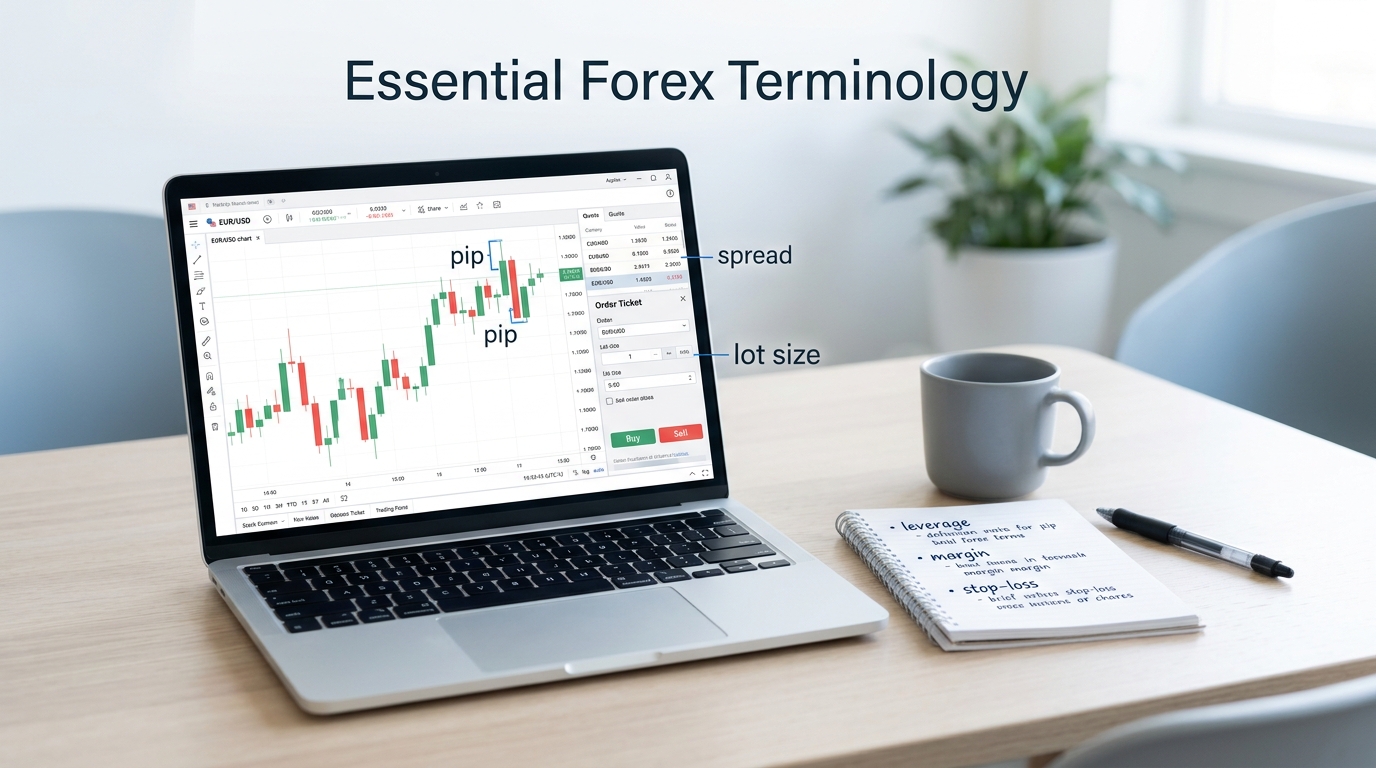
- Bid and Ask Price: The bid is the price buyers are offering for a currency, and the ask (or offer) is the price sellers want. The “spread” is the small difference between the bid and ask, and it’s how brokers usually make their money.
- Spread: The gap between the bid and ask price, usually measured in pips. Tight spreads are good for traders as you pay less to enter and exit trades.
- Pip (Point in Percentage): The smallest measure of price movement in a currency pair, usually the fourth decimal place (0.0001). Pips help you easily calculate your wins and losses.
- Lot: A standard sized unit for measuring currency trades. One “standard lot” is 100,000 units of the base currency, but you’ll also see minilots (10,000) and microlots (1,000).
- Leverage: Borrowed funds provided by brokers to increase the size of your trades. Leverage means you can control more money with less capital, but your risks go up too. For example, 100:1 leverage means you can control $100,000 in currency with just $1,000 of your own money.
- Margin: The amount of your own money you need to open and keep a leveraged position. If your margin falls too low, you could get a margin call from your broker.
- Long and Short: “Going long” means you’re buying a currency pair (expecting it to go up), while “going short” means you’re selling (expecting it to drop in value).
- Stop-Loss: An order you set up in advance to close a losing trade once it reaches a certain level, so you can automatically limit your losses if the market moves against you.
- Take-Profit: Similar to a stop-loss, but on the winning side. You set it up to lock in profits once your trade reaches a certain level and avoid missing out due to sudden reversals.
- Order Types: Market orders are trades placed at the current price, while pending orders (like limit or stop orders) only go live if the market hits a certain price.
Digging Deeper: Advanced Forex Concepts Explained
Once you’ve got those basics down, there are a few more words I find super useful in day-to-day trading. These terms pop up on most trading platforms and news sites, especially as you become more comfortable making decisions in real time.
- Slippage: Sometimes, a trade closes at a different price than you planned, usually in fast moving or less liquid markets. This difference is known as “slippage.”
- Liquidity: How easily you can buy or sell a currency pair without affecting its price too much. Major pairs like EUR/USD usually have high liquidity, which means fast, smooth trades.
- Swap (Rollover): If you leave a trade open overnight, you might either pay or earn a small interest, known as the swap or rollover rate. This is based on the interest rate difference between the two currencies in your pair.
- Cross Pair: Pairs that don’t include the US dollar (like EUR/GBP). These trade a little differently and can move in unique ways.
- CFD (Contract For Difference): Some brokers let you trade Forex as a CFD, which basically mirrors price movements without really buying or selling the underlying currency.
Practical Tips for Using Forex Terminology in Real Trading
As you start to trade, you’ll run into these terms every single day. Here are a few ways I learned to make good use of them for smarter and smoother trading:
- Check definitions in context: When you see a word in a new guide or video, look at how it’s being used; sometimes, the context gives you a hint about what it actually means.
- Bookmark a glossary: Keep an online glossary or even a printed cheat sheet nearby when you’re first starting. I found a lot of value in returning to these lists when I hit a confusing spot or joined a new broker.
- Practice on Demo Accounts: Test out your understanding by trading with a fake account. You’ll see pips, spreads, and margin call alerts in action before risking real money.
- Double-check trade sizes: Lot sizes, leverage, and pip values can add up fast, so it helps to get comfortable with the numbers before trading live.
Common Mistakes: Where New Traders Get Stuck
In my experience, most trading errors happen when people don’t quite get the lingo. Here are some pitfalls new traders run into most often and why they matter:
- Overleveraging: Using too much leverage without understanding your margin requirements or the risk if things go wrong. Even experienced traders get burned this way sometimes!
- Ignoring Stop-Losses: Hoping that losers will turn around can quickly turn into big losses. Using stop-losses properly protects your account balance and lowers stress.
- Mixing Up Quote/Base Currencies: Getting confused about which currency you’re really betting on can flip a trade upside down. Always check which is the base and which is the quote before you buy or sell.
Real-World Use: How These Terms Show Up in Forex Platforms
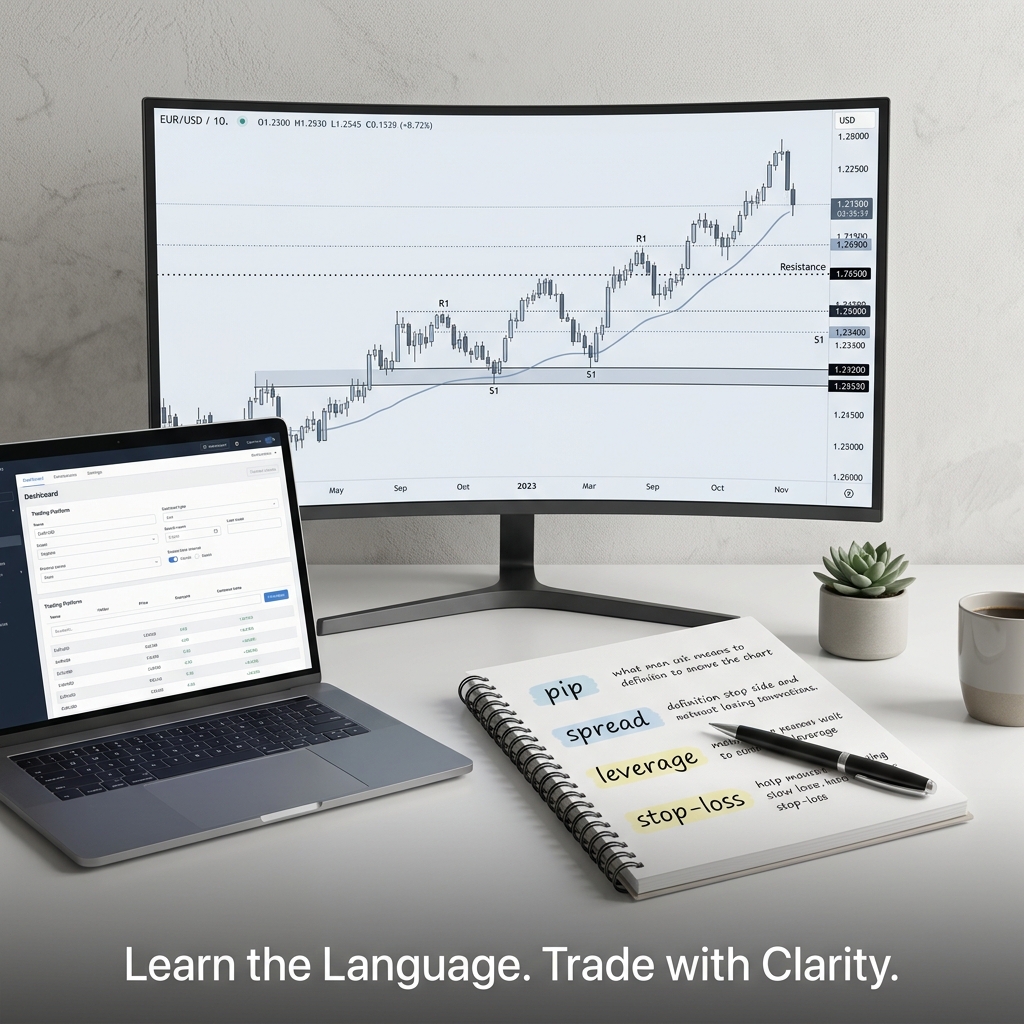
Every Forex platform, from desktop apps to mobile, relies on these basic and advanced terms. Order windows, balance overviews, and profit and loss statements all use words like “bid,” “ask,” “pip,” and “margin.” When you’ve got the language down, finding your way around any platform feels way more intuitive. You’ll find it easier to compare strategies, follow analyst discussions, and avoid awkward misunderstandings with your broker.
- Account Summary: Shows your margin, equity, leverage, and realized or unrealized profits or losses using these key terms, allowing you to quickly get a feel for your overall trading position.
- Order Management: Whether you place a stop-loss, take-profit, or pending order, knowing the terms helps you fine-tune your trades and set up strategies that fit your goals.
Frequently Asked Questions
Here are some questions I hear all the time when it comes to Forex trading terminology:
What is the difference between a pip and a point in Forex?
A pip is the standard unit of measurement in Forex and usually refers to the fourth decimal place. A point is sometimes used interchangeably, but can also mean just the smallest price change (which might be a fraction of a pip on some platforms).
Why do traders care so much about spreads?
The spread is effectively the transaction cost for entering and exiting a trade. Lower spreads can save traders money, especially if you’re trading frequently or on tight margins.
What happens if I ignore a margin call?
Ignoring a margin call can cause your broker to automatically close your losing positions so you don’t lose more than what’s in your account. It’s a good reason to keep an eye on your available margin at all times.
Can you trade Forex without using leverage?
Yes, but it’s uncommon since most brokers offer leverage by default. Without leverage, your potential gains and losses are smaller since you’re only trading with the cash you’ve deposited. Still, there are many traders use this method, and in my personal opinion it is much safer than using levarage.
Final Thoughts
Getting to grips with Essential Forex Terminology helps you make sense of charts, news, and broker reports that would otherwise feel like a foreign language. Understanding the basics keeps you from making avoidable mistakes and helps you build smarter trading strategies from day one. Taking the time to learn these terms is really important if you’re looking to grow as a trader, and it makes the whole learning process a lot smoother, less stressful, and more rewarding overall.
Once the language feels natural, you’ll notice your confidence grow. Whether you’re trading from your phone or sitting at a desktop with several screens, knowing these words inside and out pays off every single day in the Forex world. Stay curious and keep learning; you’re building a skill set that will benefit you for years to come in this fast-moving market.
The Investor
Wednesday 22 April 2026
About The Author
I started to look into individual stocks in January 2022. I created this diary initially for myself to track my investing progress, and second, as a place where I can share my ideas publicly, not only on stock investment, but on any venture that I start learning, such as Forex Trading, Blogging, or any other future venture that I might think of trying out.
By repeating things to myself, I learn by trying to explain them to others; therefore, I help myself better understand what I am learning. Additionally, hoping that others will share their ideas and learn from each other, and lastly as an online business where some links that I share are affiliate links, and if anybody bought anything by clicking those links, I will get a commission based on that successful sale, which of course will not affect the price at which you are buying the product or service.
For more detailed information on my affiliate disclosure, please refer to the Full Affiliate Disclosure page.
This blog is also part of my blogging learning project. I’m using a platform to learn this part. If you are interested in it, it is called Wealthy Affiliate.
Furthermore, this site is in no way or form giving any financial or investing advice, nor is it encouraging or discouraging people to buy or sell any financial instrument. This is a personal diary in which I track my own progress and share it for informational, educational, and entertainment purposes.
This is a really interesting article, especially the way you’ve kept it practical instead of turning it into a textbook glossary. It was more interesting how you tied each term back to real trading situations. A lot of beginners read definitions and think they understand it, but the confusion only shows up when they actually place a trade. Your explanations help bridge that gap nicely. I also appreciate you highlighting common mistakes like overleveraging and ignoring stop losses. Curious to hear your take on this if you had to pick just 2–3 terms that beginners should fully understand before placing their first trade, which ones would you prioritize and why?
I am not sure if one could do such a thing as choose terms as high priority. Still I think knowing what a Pip is and knowing levarage are on top. Still I don’t think this is the right approach to go about it.
And in any case, the first trade should always be on demo. I made the mistake of not doing that 20 years ago, but now, I have been on Demo for three yeas I think>> My logic is: why should I experiment with real money and lose, while I can perfect my trading for free.