
The Investor Diary Entry #126: April 18, 2026
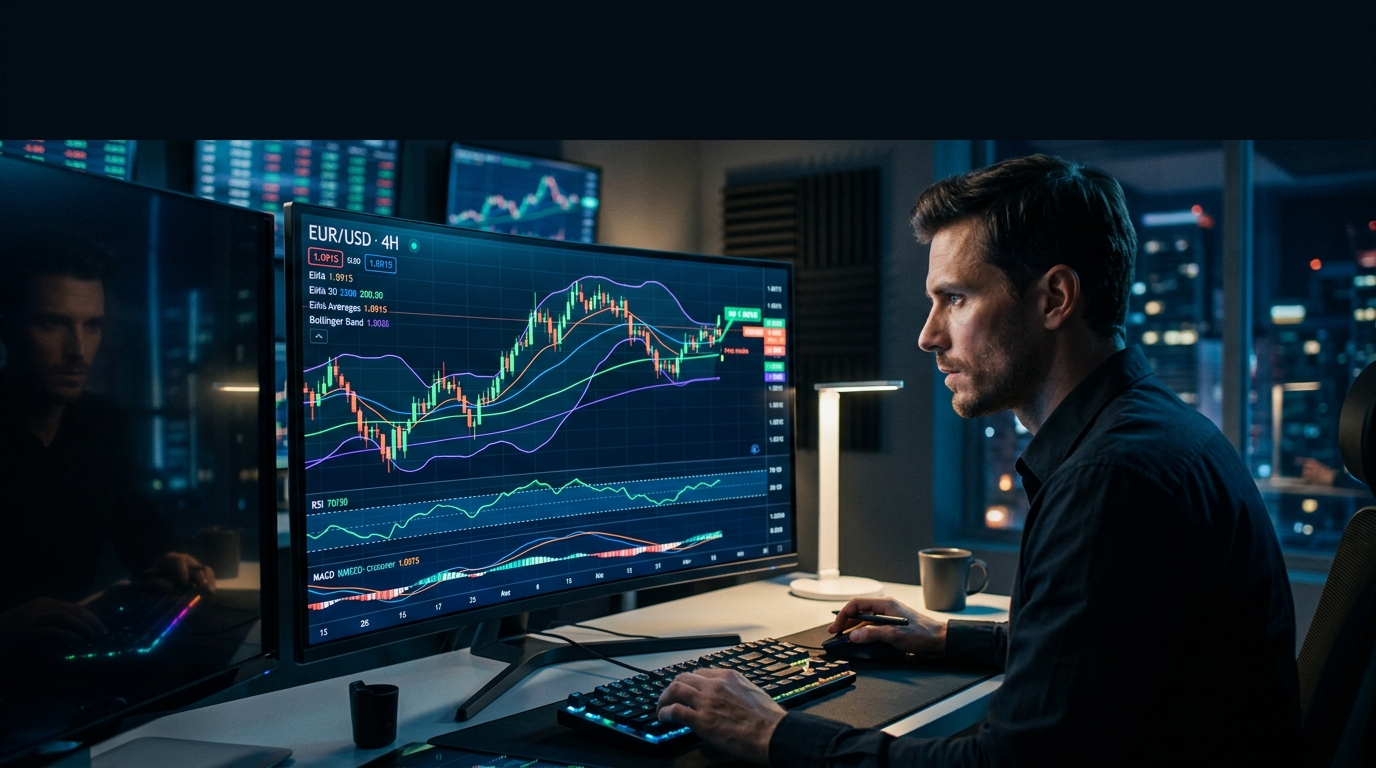
Forex trading can look pretty complex when you first start out, and a big part of that is learning about Forex Indicators. These tools are super useful for helping traders spot market trends, time their trades, and manage risks more effectively. I’ve spent tons of time exploring different indicators to see how they can help identify trading opportunities. Here, I’ll walk you through what they are, why they matter, and which ones are really worth knowing about, especially if you’re still figuring out your own strategy.
To tell you the truth currently I do not use any indicators, but I had to go through the journey of knowing different kinds of indicators and see if they can be used either independently or within a total strategy. Saying that I don’t use any indicators myself, does not make them useless, on the contrary, it might just mean that I didn’t find a way to make them fit into my current strategy in a meaningful manner, and many traders use them in a very profitable manner.
TL;DR – Forex Indicators and Spotting Trading Opportunities
Forex Indicators are important for traders at every level, helping to analyze price action, measure momentum, and confirm signals to identify trading opportunities in the forex market. By using popular indicators like Moving Averages, RSI, MACD, Bollinger Bands, and support/resistance tools, traders can strengthen their strategies, reduce risks, and potentially improve results. Learning how and when to use these indicators, rather than just following signals blindly, turns raw data into practical trading insights.
Understanding Forex Indicators
Forex Indicators are mathematical calculations, visual overlays, or technical tools that use historical price data and market volume to give hints about future market moves. These indicators help traders search for emerging patterns, highlight overbought or oversold conditions, and sometimes even alert them to possible reversals.
Most indicators fall into a couple of main buckets: trend following, oscillators, and volume based. Trend indicators show the direction of the market, oscillators gauge momentum or strength, and volume indicators track how much activity is happening behind the scenes.
If you’re just starting with Forex trading platforms, these tools will usually offer several built-in Forex Indicators you can experiment with. Getting to know what each one does, and what it doesn’t do, makes a huge difference in building your confidence and improving your results.
Popular Forex Indicators to Identify Trading Opportunities
Here are some of the most widely used Forex Indicators that traders often rely on to spot new trades. Some work best on their own, while others can be combined for more accurate signals.
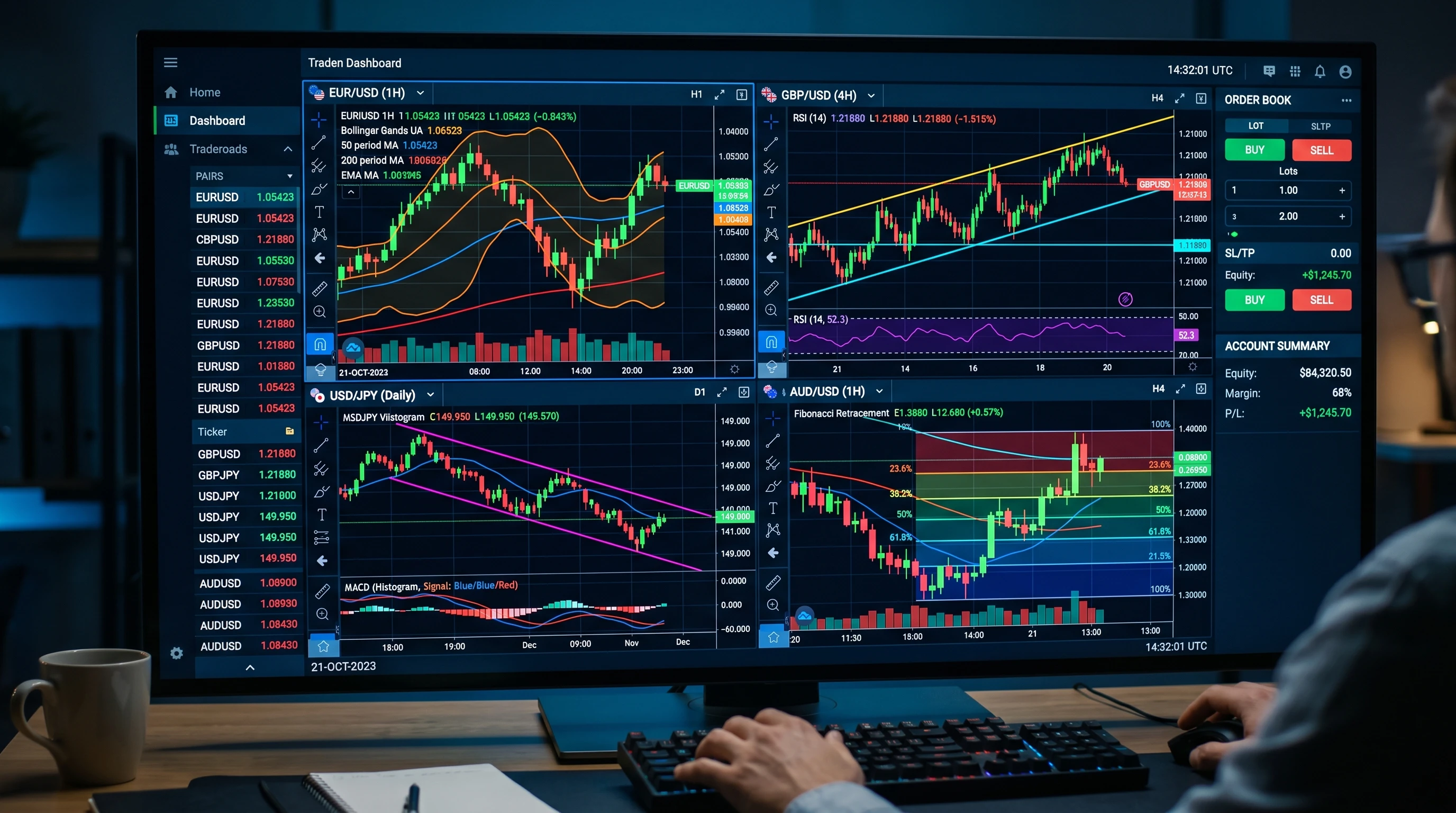
- Moving Averages (MA): This indicator smooths out price data over a set period and shows the average value of a currency pair. The Simple Moving Average (SMA) and Exponential Moving Average (EMA) are the most common versions. A crossover between a short term and a long term average can hint at trend changes.
- Relative Strength Index (RSI): RSI measures the speed and change of price movements. Readings above 70 can mean a pair is overbought, while below 30 means it’s oversold. That’s a quick way to spot possible reversals and avoid buying high or selling low.
- MACD (Moving Average Convergence Divergence): MACD visualizes the relationship between two moving averages and helps identify when momentum is shifting. Watch for line crossovers and how the indicator’s histogram changes for trade ideas.
- Bollinger Bands: These bands expand and contract based on market volatility. When prices touch the upper or lower band, a reversal or pullback might be coming. Sometimes trading simply means waiting for the bands to squeeze (move closer) and then break out in a new direction.
- Support and Resistance Levels: Not a traditional indicator, but drawing lines at areas where price often bounces or stalls can really help refine entries and exits. Lots of traders use horizontal lines, Fibonacci retracements, or other indicator overlays to visualize these areas.
When I used to use indicators, I searched for them and used them in TradingView, not the trading platform that I use for trading. TradingView has an extremely large library of indicators.
How to Use Forex Indicators the Right Way
Throwing a bunch of indicators on your chart can get confusing fast. I’ve found it’s often better to pick a couple that suit your trading style, understand how they work, and use them to confirm your own ideas rather than relying on any one indicator alone.
- Confirm Trends: Use trend following indicators (like Moving Averages or MACD) to double-check whether you’re trading in the same direction as the broader market.
- Identify Overbought/Oversold Conditions: Oscillators like the RSI or Stochastic can flag extreme conditions and alert you to cooling periods or breakouts.
- Combine Indicators: Try combining complementary indicators for extra confidence. For example, if a moving average crossover lines up with the RSI leaving an oversold zone, that’s a stronger potential trade.
- Avoid Signal Overload: Too many signals can lead to indecision or conflicts. Using a minimal, well understood toolkit works better for making consistent decisions.
Common Challenges With Forex Indicators
Indicators are handy, but you have to remember they’re based on historical data and aren’t always accurate about the future. Here are a few things I keep in mind that help avoid common pitfalls:
- Lagging vs. Leading: Some indicators (like moving averages) lag behind the price, meaning they confirm trends after they start. Others, like RSI or Stochastic, are more “leading” but can be wrong on their own.
- False Signals: In choppy or sideways markets, indicators can give lots of fake signals. That’s why it’s really important to use them with a bigger context and check for confluence (agreement across several tools).
- Ignoring Risk Management: No indicator is perfect! I always set stop loss and take profit levels, because sometimes the market will move in totally unexpected ways.
This is a topic that I talked about in detail in another diary entry. What are the things that actually affect the price movement, and what the things that are affected by price movement. This philosophy led me to move away from indicators as they are only a reflection of what the price has done and not a reason for the price to move in a certain direction.
Managing Expectations
Despite what flashy ads say, indicators won’t turn you into a pro overnight. I think of them more as a set of tools in a toolbox, not a magic button. Practicing in a demo account, studying past trades, and constantly learning about your chosen indicators can really help boost your trading skills over time. Remember, each indicator has unique strengths and weaknesses, so take the time to understand why they work the way they do.
To test indicators faster, not only I used a demo account, but also used backtesting, either on TradingView Replay feature or through using a simple backtesting tool called Traders Casa.
Step by Step Guide for New Traders
If you’re brand new to using Forex Indicators to identify trading opportunities, here’s a basic process I’ve followed myself:
- Pick a Simple Strategy: Start with one or two indicators, such as a Moving Average and RSI. Focusing on simplicity helps early on.
- Apply to a Demo Account: Practice placing trades with fake money using real market data. This is where you’ll see how signals actually play out. Or use a backtesting tool to get faster results rather than wait for the current market to move through a demo account.
- Keep a Trading Journal: Record why you entered each trade, which indicators you used, and what worked or didn’t. Reviewing this helps spot patterns in your success (and failures). This one is a must. Make it a habit, even when you become profitable.
- Adjust and Improve: Don’t be afraid to tweak your approach as you learn. Sometimes what looks good in a guide just doesn’t match your personality or time availability.
- Upgrade Your Toolkit: Once you’ve mastered basics, gradually add more advanced indicators or try out other forex trading platforms that offer extra tools.
Frequently Asked Questions
Here are some of the most common questions about Forex Indicators and how they help identify trading opportunities:
Question: Are Forex Indicators reliable on their own?
Answer: Indicators are helpful for giving context and showing possible signals, but they work best when combined with other analysis techniques, like price action, risk management, and watching news events. Depending on a single indicator often leads to mixed results.
Question: What’s the best indicator for beginners?
Answer: Moving Averages and RSI are two beginner friendly indicators. They’re easy to understand, and most major forex trading platforms provide built-in tools for each. Start simple, learn how they interact, and build from there.
Question: Can you automate trading using indicators?
Answer: Yes, plenty of traders automate their strategies using algorithmic systems or bots that rely on indicator based signals. Most trading platforms support backtesting so you can see how strategies would have worked in the past.
Question: How often should I adjust my indicator settings?
Answer: There’s no set rule; the best settings often depend on your time frame, trading style, and which currency pairs you prefer. I like to test different periods for indicators on demo charts before deciding what feels right for my trades.
Question: Do professional traders use Forex Indicators?
Answer: Plenty of experienced traders use indicators, but they almost always blend them with other methods. Many pros spend just as much time watching price action and market news as they do technical signals.
Wrapping Up: Building Confidence with Forex Indicators
Mastering Forex Indicators is more about building skill and confidence than hunting for a “perfect signal.” Combining the right indicators with smart money management and ongoing practice turns them into practical tools for spotting those trading opportunities. Over time, you’ll build a custom kit that fits your trading goals, rather than getting lost in endless chart overlays or “miracle” systems.
Experiment with new setups, review your trades, and make use of good Forex trading platforms to stay organized. That’s how you give yourself the best shot at turning insight into action in the forex market. Stay curious, keep learning, and always remember to practice patience in your trading adventure.

The Investor
Saturday 18 April 2026
About The Author
I started to look into individual stocks in January 2022. I created this diary initially for myself to track my investing progress, and second, as a place where I can share my ideas publicly, not only on stock investment, but on any venture that I start learning, such as Forex Trading, Blogging, or any other future venture that I might think of trying out.
By repeating things to myself, I learn by trying to explain them to others; therefore, I help myself better understand what I am learning. Additionally, hoping that others will share their ideas and learn from each other, and lastly as an online business where some links that I share are affiliate links, and if anybody bought anything by clicking those links, I will get a commission based on that successful sale, which of course will not affect the price at which you are buying the product or service.
For more detailed information on my affiliate disclosure, please refer to the Full Affiliate Disclosure page.
This blog is also part of my blogging learning project. I’m using a platform to learn this part. If you are interested in it, it is called Wealthy Affiliate.
Furthermore, this site is in no way or form giving any financial or investing advice, nor is it encouraging or discouraging people to buy or sell any financial instrument. This is a personal diary in which I track my own progress and share it for informational, educational, and entertainment purposes.
I really enjoyed this breakdown of forex indicators and how they can help traders spot potential opportunities in the market. What stood out to me most is the reminder that indicators are not magic signals on their own, but tools that need context, patience, and proper risk management to be useful. It’s easy for beginners to over-rely on something like RSI or moving averages, so the emphasis on using them as support rather than prediction is really important.
I also liked how the article highlighted that different indicators work better in different market conditions, especially trending versus ranging markets. That really reflects how dynamic forex trading actually is in real life.
Do you think beginners should focus on mastering just one or two indicators first, or is it better to learn a combination of several from the beginning to understand how they interact?
The idea is to understand how each indicator behaves and what information it give the trader, then combine it with another and then another. The objective, like in any business, generate information of what the chart is saying to be able to create a trading strategy that would communicate seamlessly with the indicators.
Personally, I don’t indicators now. I just have them on screen for curiosity reasons, but not to make decisions based on them. Another article that I wrote, it talks about what are the things that affect prices, and what are the things that are affected by the price. The majority of indicators are affected by the price, therefore, they are just repackaging past price behaviour but they do not affect the movement of the price.
I didn’t include this knowledge in this article, because I thought it was a bit advance and it might confuse rather than help at this stage.