
The Investor Diary Entry #130: April 28, 2026
Getting started in the Forex market can feel overwhelming at first, but the process becomes much more manageable when you break it down into a series of clear Forex market steps. With all the talk about currencies, brokers, and pips, knowing what to do next can get a little confusing. I’ve been through that early learning curve and I want to help take the mystery out of entering the Forex market for newcomers. Whether you want to trade as a side hustle or turn it into something bigger, a step-by-step approach will help boost your confidence and guide you away from common rookie pitfalls.
TL;DR: Quick Steps for Forex Market Beginners
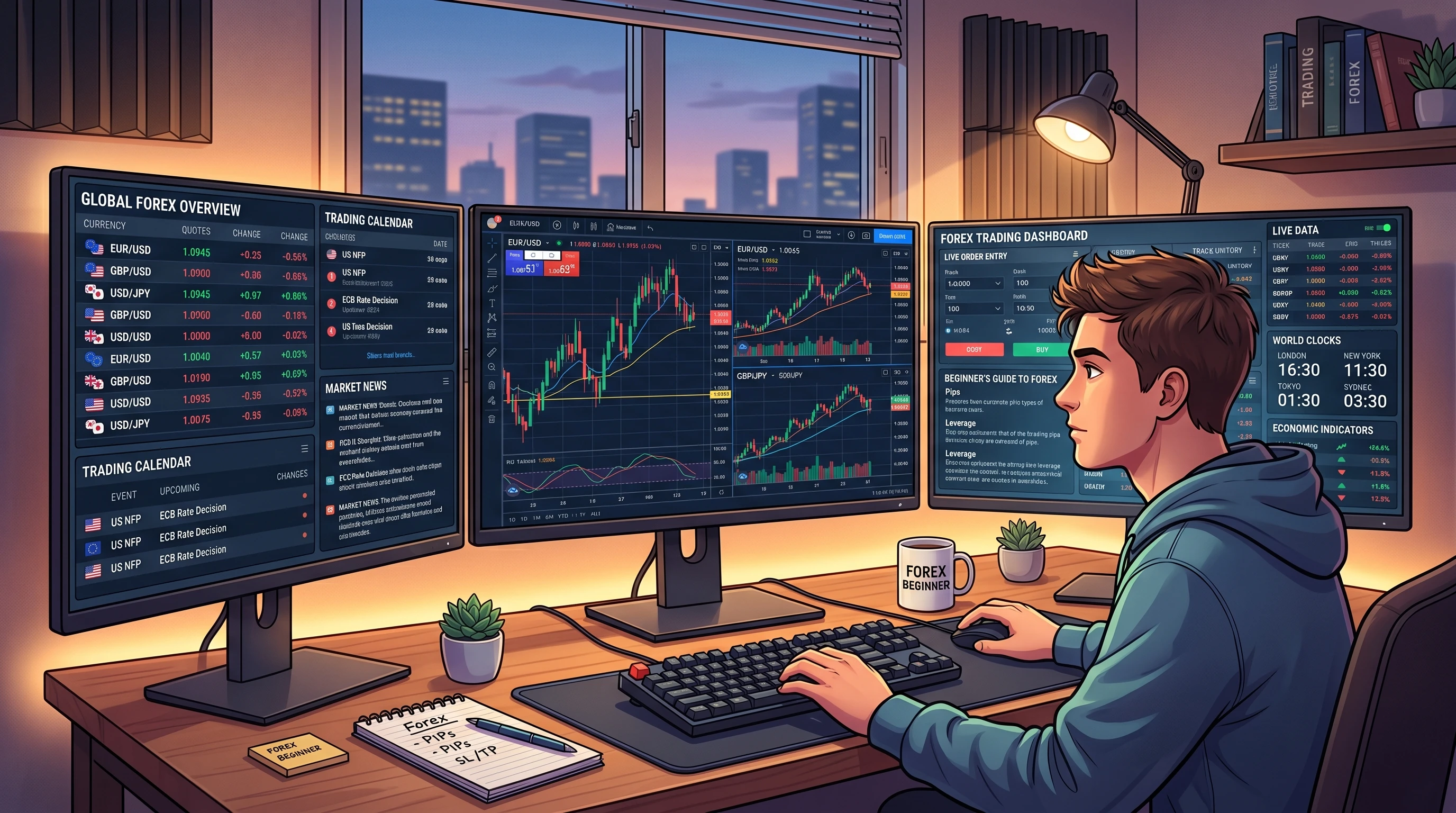
New traders entering the Forex market should start by learning essential terminology, choosing a reliable broker, gaining basic strategy skills, and practicing with demo accounts before trading real money. Knowing key Forex market steps, setting up risk management strategies, and practicing with simulated trades helps reduce losses and build confidence. Getting familiar with Forex market structure and core concepts will put you on the right track quickly.
Intro to the Forex Market and Why People Get Into It
Trading in the Forex market grabs a lot of attention, especially since it operates 24 hours a day and offers the chance to trade from almost anywhere. Instead of trading stocks in individual companies, you trade currency pairs like EUR/USD, GBP/JPY, and others. Forex is massive, with daily trading volumes surpassing any other financial market. That makes liquidity high; you can enter and exit trades quickly with the click of a button.
Many people get into Forex trading for the flexibility it offers, the potential for quick profit opportunities, and the relatively low capital requirements compared to stocks or real estate. With a sound strategy and the right mindset, it’s pretty accessible to almost anyone with an internet connection and a bit of starting capital. Even more, the global nature of Forex means there are always opportunities, regardless of where you live or the current time zone. This around-the-clock activity is a big attraction for those with nontraditional schedules or for people looking to supplement other incomes.
Still, don’t let those general statements become deceptive. They are descriptive of the nature of the Forex market, but for example, as much as the market operates around-the-clock is true, but that it is suitable regardless of where you live or the current time zone, should be studied carefully. We will look into this aspect in a future article, but the time to trade is one of theings that a person will learn early on in the journey of Forex education.
Step 1: Learn Essential Forex Terminology
A good foundation in essential Forex terminology is really important when you’re new to this. Spending just a few hours on the basics will prevent the technical terms from tripping you up later. Concepts like currency pairs, pips, leverage, margin, ask price, bid price, orders, and spreads come up over and over in Forex circles. Getting to know these terms helps you find your way around broker platforms and interpret trading instructions much faster.
I recommend checking out this essential Forex terminology resource for quick reference guides and explanations that are easy to come back to whenever you hit a snag. Taking the extra time to get familiar with these terms at the start will make later lessons much easier and help you spot critical info in news updates or trading discussions.
Step 2: Find a Reliable Forex Broker
Choosing a broker is one of the more important steps in this adventure. Not all brokers operate under the same rules or offer the same trading experience. Look for brokers that are regulated by a trusted financial authority, have a solid reputation, offer a transparent fee structure, and provide a platform that’s beginnerfriendly.
A demo account is pretty handy for trying out different brokers without risking real cash. Most reputable brokers offer free demo accounts. That way, you get to practice trading, test drive their software, and see how quickly their support team responds to questions. A fast and reliable support team is usually a great sign of their overall quality for live trading down the line. It’s also wise to read reviews and make sure there are no red flags about withdrawals or platform stability, as these are essential for stress-free trading.
Step 3: Set Up Your Trading Account and Platform
Once you pick a broker, opening your account usually only takes a few minutes. You’ll need to provide identification, some personal info, and sometimes proof of address. After your account is verified, you can get into the trading platform; MetaTrader 4 or 5 are common choices for beginners.
Most platforms offer trading on real accounts and on demo accounts, which makes practicing risk-free possible. Take this time to learn the platform’s layout: how to open and close trades, set stoplosses, read charts, and check margin levels. These basics reduce a lot of initial confusion and give you a place to build good trading habits. Reviewing the platform’s built-in tools and support documentation can also help break down more advanced features as you progress.
Step 4: Get the Basics of Forex Strategies and Market Analysis
Rushing into trades without strategy or analysis usually leads to avoidable mistakes. The best way to avoid this is to focus on learning basic strategies suited to new traders: simple trend following, breakout trading, and practice with technical indicators like moving averages or RSI.
Once you become comfortable with basic strategies, gradually increase the complexity by introducing new concepts and trading schools such as Forex market structure analysis.
Staying up to date on economic calendars and financial announcements will help you anticipate moves and plan trades with solid timing.
Step 5: Build a Strong Risk Management Plan
Risk management is something you absolutely don’t want to skip. Most traders who lose big in the Forex market ignore risk controls or use too much leverage for their trades. You want to set a strict stoploss with every trade and only risk a small percent of your trading account for any single trade, usually under 2% is a good benchmark for beginners. That way, unexpected market swings won’t wipe out your account.
Some platforms even let you preset your risk parameters. Making use of that feature gives you an extra buffer against impulsive decisions or tough trading days. Remember, consistency in your risk approach pays off more than trying to hit a big win. Reviewing your trade logs regularly will also show you patterns and habits that need fixing earlier, helping you step up your trading routine and confidence over time.
Step 6: Try Demo Trading First
Trading with fake money might feel boring, but demo accounts are a goldmine for building confidence. You’re free to experiment, test strategies, and make mistakes without suffering real losses. The goal is to reach the point where opening trades and managing them feels like second nature. Once you’re comfortable and consistent in the demo environment, then it’s time to consider trading with real money.
Demo trading also helps you spot areas where your plan needs work, figure out which currency pairs suit your style, and get to know how you react emotionally to market shifts—something rarely mentioned but crucial for longterm success. Take notes during your demo trades about your decisions and emotions, as this habit makes it much easier to adjust when you make the switch to live trading with real money.
Step 7: Go Live With a Real Account (Carefully)
Going live is super exciting, but it’s also the stage where nerves and inexperience can creep in. Start with the smallest trade sizes (known as micro lots) your broker allows. Keep risk parameters tight and don’t rush to multiply your trades. It’s better to build a routine, track your trades in a journal, and gradually increase your trading size as you get more confident.
Review your performance after every week or two. Look at both your winning trades and your losses to spot what you did right or what needs some improvement. Over time, this habit sharpens your trading instincts and keeps your emotions in check.
Common Pitfalls for Forex Newcomers and How to Avoid Them
- Overleveraging: Using too much leverage is tempting, but it can drain your account fast. Stick with low leverage until you’re more experienced.
- Chasing Losses: Trying to win back lost trades by doubling down usually leads to bigger losses. Accept losses as part of the experience and focus on lining up the next good trade.
- Skipping the Demo Stage: Jumping straight into live trades before using a demo makes expensive mistakes much more likely. Embrace the demo—it is your training ground.
- Ignoring Market News: Big news events (like central bank decisions) can swing the Forex market wildly. Stay aware and avoid trading during highvolatility events if you want more stable conditions for your trades.
Practical Example: A Day in the Life of a Beginner Forex Trader
Imagine you open your laptop and glance at the major currency pairs. You spot a trending pair, do some Forex market structure analysis, and set up a trade on your demo account, planning your stoploss and takeprofit. As the trade plays out, you jot down your reasoning in a journal so you can review later. This daily habit speeds up your growth much more than trading at random. Reviewing your journal helps you make sense of good moves and minimize repetitive mistakes, bringing more order to your Forex adventure.
Frequently Asked Questions
Here are answers to practical questions people have when getting started in the Forex market:
What is the minimum amount needed to enter the Forex market?
Answer: Entry amounts vary by broker, but you can start with as little as $50 to $100 at most brokers. However, starting with more lets you trade with less risk per trade and have a better cushion against losing streaks.
How long should I demo trade before switching to real money?
Answer: There’s no set timeline. Some traders demo for a month, others for several. What matters more is feeling consistent, confident, and knowing your strategy works before switching.
What is the best Forex trading strategy for beginners?
Answer: Simple strategies based on trend following or support and resistance levels are great starting points. Building up confidence and understanding with setups of low complexity is the smarter way to start out.
Do I need to learn technical and fundamental analysis?
Answer: Learning both helps, but technical analysis is often easier to start with. Understanding economic news, however, goes a long way in getting ahead of major market moves and planning entries or exits better.
Wrapping Up
Getting started in the Forex market comes down to taking steady Forex market steps, learning the basic terminology, choosing the right broker, practicing with a demo account, and always keeping an eye out for risk management. Taking the time with each step instead of rushing ahead builds skills and confidence that stick with you. Stay curious and always check in on your process to keep leveling up; there are no shortcuts, just consistent growth.
If you’re thinking of trading Forex, a patient approach, honest selfreflection, and an open mind to keep learning can make a real difference over time. Wishing you the best, and enjoy the adventure!
The Investor
Tuesday 28 April 2026
About The Author
I started to look into individual stocks in January 2022. I created this diary initially for myself to track my investing progress, and second, as a place where I can share my ideas publicly, not only on stock investment, but on any venture that I start learning, such as Forex Trading, Blogging, or any other future venture that I might think of trying out.
By repeating things to myself, I learn by trying to explain them to others; therefore, I help myself better understand what I am learning. Additionally, hoping that others will share their ideas and learn from each other, and lastly as an online business where some links that I share are affiliate links, and if anybody bought anything by clicking those links, I will get a commission based on that successful sale, which of course will not affect the price at which you are buying the product or service.
For more detailed information on my affiliate disclosure, please refer to the Full Affiliate Disclosure page.
This blog is also part of my blogging learning project. I’m using a platform to learn this part. If you are interested in it, it is called Wealthy Affiliate.
Furthermore, this site is in no way or form giving any financial or investing advice, nor is it encouraging or discouraging people to buy or sell any financial instrument. This is a personal diary in which I track my own progress and share it for informational, educational, and entertainment purposes.
Getting started in the Forex market really does come down to patience and structure, and this guide captures that well. What I like most is the emphasis on demo trading and risk management early on, those are the two areas beginners usually underestimate.
It’s tempting to jump straight into live trades, but practicing first and understanding how leverage actually affects your account can save you from expensive mistakes. Also, focusing on just a couple of currency pairs instead of everything at once makes the learning curve much smoother.
One thing I’d add is to treat trading like a skill, not a shortcut to quick money. Progress is usually slow at first, but consistency pays off.
Overall, a solid, realistic roadmap for anyone serious about starting Forex the right way.
What you said at the end summarizes my whole blog and all the articles it has. Trading is a skill that need to be learned. Thank you very much.